
Ghana Harmattan Travel Guide: Dust, Roads, Flights & Health Tips
The short answer: harmattan can make Ghana travel drier, dustier, hazier, and slower, especially from the late-year dry season into early-year conditions and most noticeably in northern and interior routes. Do not cancel a good trip just because harmattan is possible. Plan with flexible road timing, flight buffers, hydration, skin and eye comfort, respiratory precautions, and a willingness to move outdoor-heavy days when visibility or dust advisories change.
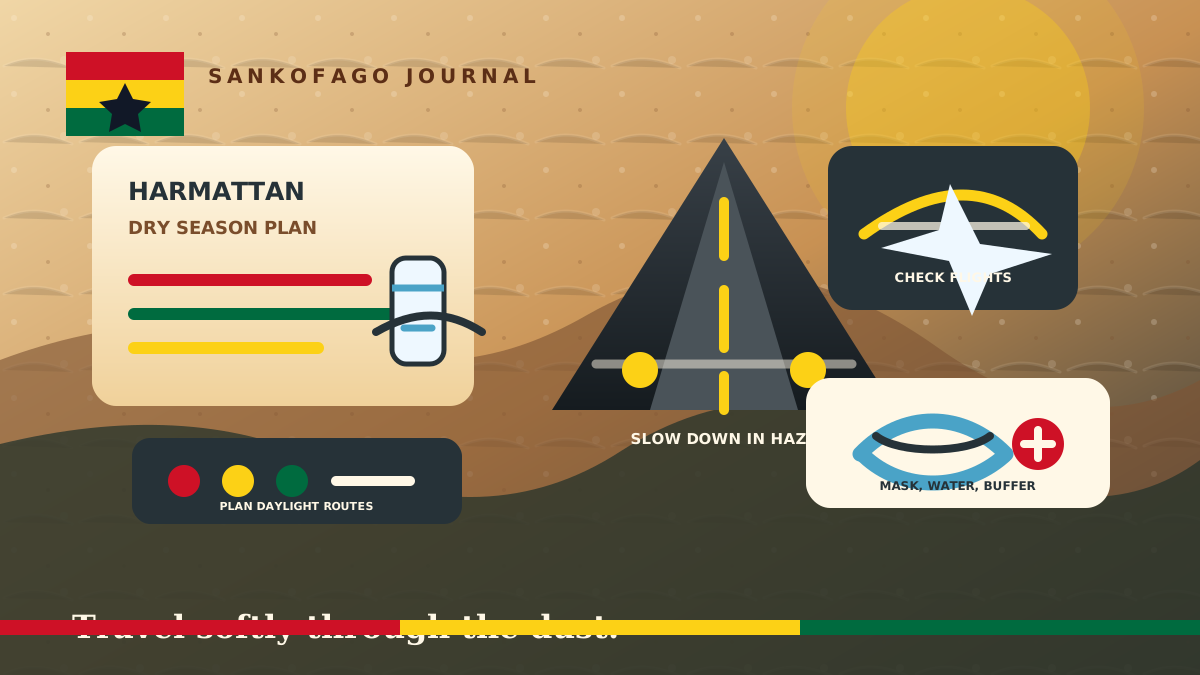
The short answer: plan for dust, not panic
Harmattan is the dry, dusty wind pattern that can affect Ghana during the dry season. For travelers, the practical issue is not only the feeling of dry air. It is reduced visibility on roads, dust in eyes and throats, possible breathing discomfort, washed-out photographs, early-morning haze, delayed movement, and occasional disruption to flights or long drives.
This guide is not a repeat of SankofaGo's rainy-season, packing-list, health, safety, domestic-flights, airport-departure, self-drive, or public-holidays guides. Those answer rain, luggage basics, vaccines and malaria, general safety, flight route choice, departure timing, driving, and calendar closures. This article answers a narrower question: how should you plan a Ghana trip when harmattan dust and dry-season haze may shape the day?
- Check Ghana Meteorological Agency alerts close to travel, especially before northern and intercity road days.
- Keep long drives in daylight and add time for slower speeds in low visibility.
- Use larger buffers before domestic and international flights when dust or visibility advisories are active.
- Travel with water, lip balm, moisturizer, sunglasses, eye drops if you normally use them, and a well-fitting mask if dust bothers you.
- Ask a clinician before travel if you have asthma, COPD, heart disease, severe allergies, or a child with breathing concerns.
When harmattan matters in Ghana
The U.S. State Department describes Ghana's dry season as November to March and notes that harmattan winds often happen during the dry season. It also says these dry, dusty Sahara winds can reduce visibility, cause breathing problems, and affect air travel. That is the core travel-planning frame: harmattan is seasonal, but the intensity is not identical every week or every region.
Northern Ghana often feels the dust earlier and more strongly than parts of the coast. Ghana Meteorological Agency alerts in November 2025 and February 2026 both focused on northern Ghana, with dust or haze reducing visibility and dry air creating difficult conditions. Accra, Cape Coast, Kumasi, Tamale, Mole, Volta routes, and Eastern Region stops can all feel different on the same day.
A good Ghana plan treats harmattan like a moving condition, not a fixed month label. December visitors may be focused on events and family time; January and February travelers may feel more dust and dryness; March travelers may still meet dry-season conditions before rain patterns shift. The smart move is to build a route that can flex around official weather alerts instead of assuming every dry-season day behaves the same.
What current alerts show
Ghana Meteorological Agency issued a harmattan alert on November 16, 2025 for dusty conditions and reduced visibility across northern Ghana, citing forecast visibility of about 2,000 to 6,000 meters in affected areas and daytime relative humidity of about 20% to 40%. The instructions advised people with respiratory conditions to limit outdoor activity, keep medication available, reduce prolonged outdoor exposure, hydrate, use moisturizers, and consider face masks and eye protection when outside.
GMet issued another harmattan advisory on February 16, 2026 for dry and dusty weather over northern Ghana. It said dust from northern Africa was expected to affect the northern half of the country, with visibility dropping significantly, roughly 1 km to 6 km across affected areas, and afternoon relative humidity below 10% in parts of the sector. Its instructions emphasized nose masks or face coverings, cautious driving, headlights in low visibility, medication readiness for asthma, protecting children, and covering water and food from dust.
Those alerts are expired historical examples, not a forecast for your specific travel date. They are useful because they show the type of operational detail travelers should look for: affected regions, expected visibility, humidity, timing, driving instructions, and health precautions. Before any harmattan-season road day, check the live GMet forecast or have your planner verify it.
Road timing and drivers
Harmattan is a road-planning issue because haze changes what drivers can see. GMet tells drivers to exercise extreme caution, reduce speed, use headlights in low-visibility conditions, and be especially careful early in the morning and late in the evening. The National Road Safety Authority has also advised drivers during harmattan to slow down, keep safe following distance, use lights when needed, avoid unnecessary overtaking, keep windows and mirrors clean, and watch pedestrians.
For travelers, that means the itinerary should stop pretending every route is just a number of hours from a map. Accra to Kumasi, Kumasi to Tamale, Tamale to Mole, Tamale to Paga, Accra to Cape Coast, Eastern Region road days, and Volta hill routes all need daylight-first thinking when haze is present. A skilled driver is still not a weather shield.
Mid-article planning note: start at /plan and ask Nana for a "harmattan-aware Ghana route." Share your dates, arrival airport, cities, family towns, children or elders, asthma or breathing concerns, domestic-flight ideas, and must-do outdoor stops. SankofaGo can help place the dust-sensitive days where they cause the least stress.
Flights, airports, and buffers
The State Department specifically notes that harmattan winds may affect air travel. That does not mean every flight will be delayed, and SankofaGo should not promise that any airline will operate, delay, waive fees, or rebook a traveler in a particular way. It does mean travelers should avoid stacking a tight domestic flight, an international departure, a long road transfer, and a major event on the same fragile day.
Ghana Airports Company Limited operates Ghana's government-owned airports, while the Ghana Civil Aviation Authority regulates aviation safety and consumer protection. GCAA's passenger information says domestic passengers may be entitled to support when flights are delayed or cancelled under applicable directives, and its complaint portal exists for unresolved passenger concerns. Keep airline contacts, booking references, identification, and onward transport details easy to reach.
If you are flying to Tamale, Kumasi, Takoradi, Wa, or connecting back to Accra before an international departure, build a cushion. A harmattan-season plan is stronger when the important international flight sits after a calm Accra night, not at the end of a dusty road-and-air chain that has no slack.
Health and comfort without overclaiming
The CDC Yellow Book advises travelers, especially those with underlying heart or lung disease, to investigate air quality at their destination. It says poor air quality can be a problem for travelers and notes that NIOSH-approved particulate respirators such as N95 or P100 masks can help protect against very small particles when exposure is likely, while dust masks, surgical masks, and bandanas offer limited protection against severe pollution.
CDC air-quality guidance explains that particle pollution includes dust, dirt, soot, smoke, and liquid droplets. Larger PM10 particles can irritate the eyes, nose, and throat, while smaller PM2.5 particles can reach deeper into the lungs. People more likely to be bothered by particle pollution include those with asthma or other lung diseases, heart disease, diabetes, older adults, babies, and children.
This is planning guidance, not medical advice. If you have asthma, COPD, heart disease, severe allergies, pregnancy, immune concerns, or a child who wheezes, ask your clinician what to pack and when to reduce outdoor activity. Bring more than wishful thinking: prescribed medication, copies of prescriptions, a plan for flare-ups, and trip insurance details are calmer than roadside improvisation.
Packing for harmattan days
Harmattan packing is small but specific. Travelers often need water within reach, moisturizer, lip balm, sunglasses, a brimmed hat, comfortable layers for cooler mornings or evenings, and dust-aware storage for contacts, cameras, phones, and medicines. If you normally use lubricating eye drops or saline spray, discuss appropriate options with your clinician or pharmacist before travel.
Clothing should still respect the actual trip: city visits, family homes, churches, mosques, palaces, beach stops, castles, markets, and restaurants all carry different expectations. Harmattan does not cancel cultural etiquette. It simply adds dry air, dust, and comfort questions to the same thoughtful packing you would already do for Ghana.
Photographers and creators should add lens cloths, sealable bags, and patience. Haze can flatten views and soften distant landscapes, but it can also create beautiful light. Ask before photographing people, avoid filming sensitive sites, and remember that a dusty day may be better for a slower market, museum, food, or family visit than for the clearest skyline shot.
Best itinerary moves in harmattan
Outdoor anchors are still possible during harmattan, but the order matters. Put strenuous walks, canopy bridges, wildlife drives, waterfalls, markets, and long heritage days earlier when visibility, heat, and group energy are better. Keep indoor or flexible stops nearby: National Museum, W.E.B. Du Bois Centre, Kwame Nkrumah Memorial Park, Manhyia Palace Museum, calmer restaurants, fabric appointments, or family visits can rescue a day when dust makes distance less appealing.
Families and elders need special pacing. Children may complain about eyes, lips, noses, and thirst before adults notice a problem. Elders may prefer fewer transfers and more vehicle comfort. Travelers coming home for family obligations may need help saying no to one more late drive because the road conditions, not the family politics, should decide the day.
If harmattan is likely during your dates, visit /pricing to choose the support level that fits, then go to /plan and write "harmattan season" in the notes. Tell Nana where you want to go, who is traveling, what health or comfort needs matter, and which outdoor stops are must-do versus flexible. SankofaGo can build the route with buffers instead of bravado.
Frequently asked questions
What is harmattan in Ghana?
Harmattan is a dry, dusty wind pattern associated with Ghana's dry season. For travelers, it can mean haze, lower visibility, dry skin and eyes, throat irritation, slower road movement, and possible air-travel disruption.
When is Ghana's harmattan season?
The U.S. State Department describes Ghana's dry season as November to March and says harmattan winds often occur during the dry season. Exact timing and intensity vary by week and region, so check Ghana Meteorological Agency updates close to travel.
Is it safe to travel to Ghana during harmattan?
Many travelers visit Ghana successfully during harmattan, but the trip should be planned around dust, visibility, hydration, respiratory comfort, and daylight road timing. Travelers with asthma, COPD, heart disease, severe allergies, or young children should seek medical advice before travel.
Can harmattan affect flights in Ghana?
Yes. The U.S. State Department notes that harmattan winds can affect air travel. Build larger buffers around domestic flights and avoid tight same-day connections before major events or international departures.
What should I pack for harmattan in Ghana?
Useful items include water, lip balm, moisturizer, sunglasses, a brimmed hat, light layers, dust-aware bags for electronics, and a well-fitting particulate mask if dust bothers you. Bring prescribed respiratory medication if your clinician recommends it.
Should I drive in Ghana during harmattan?
If haze or dust is active, intercity travel is better with an experienced driver, daylight timing, reduced speed, headlights when visibility is poor, and flexible arrival expectations. Avoid unnecessary overtaking and rushed night travel.
Can SankofaGo plan a harmattan-season Ghana trip?
Yes. SankofaGo can design a route with weather checks, daylight road days, flight buffers, health-aware pacing, outdoor backups, and realistic timing for families, elders, diaspora travelers, business visitors, and first-time Ghana guests.
Sources & further reading
- Ghana Meteorological Agency - Harmattan advisory, February 2026
- Ghana Meteorological Agency - Harmattan alert, November 2025
- U.S. State Department - Ghana Travel Advisory and country information
- CDC Yellow Book - Air Quality and Ionizing Radiation During Travel
- CDC - Air Pollutants and Particle Pollution
- Ghana Civil Aviation Authority - Passenger FAQ
- Ghana Civil Aviation Authority - Passenger Complaint Portal
- Ghana Airports Company Limited - official site
- Ghana News Agency - NRSA harmattan driving precautions
- GOV.UK - Ghana safety and security travel advice
Ready to see it for yourself?
Plan your Ghana trip free with Nana, our AI planner — then our team books every car, hotel, and guide. You just confirm, pay, and go.
Start planning — it's free