
How Many Days Do You Need in Ghana? 7, 10 & 14-Day Itineraries
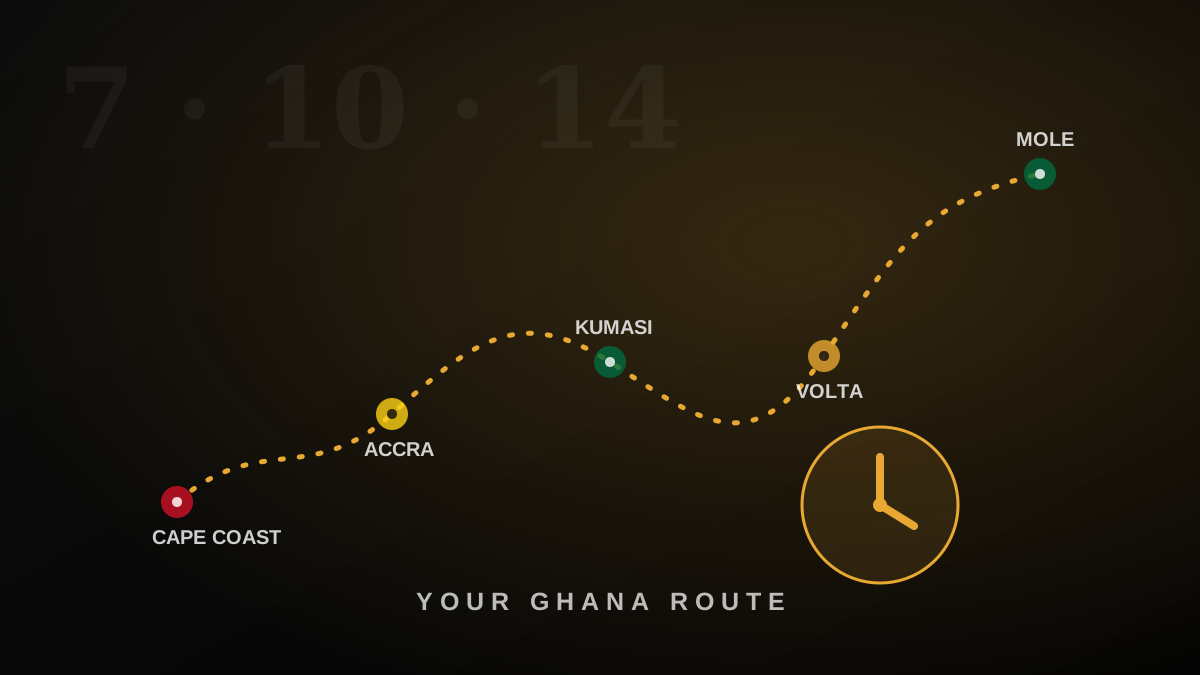
Ten days is the sweet spot for a first trip to Ghana: it gives you time for Accra, the UNESCO-listed coastal heritage sites around Cape Coast and Elmina, and either Ashanti culture in Kumasi or nature in the Volta Region without turning every day into a transfer. Seven days works for a focused Accra-and-coast journey. Fourteen days lets you add both Kumasi and Volta—or fly north for Mole National Park. The right length depends less on how many pins fit on a map and more on the pace, history, people, and rest you want the journey to hold.
The short answer: choose your trip length by pace
Ghana rewards unhurried travel. Distances that look modest can take longer than expected because of city traffic, road conditions, meal stops, and the simple fact that meaningful visits do not run like a checklist. Cape Coast Castle is not a place most travelers want to rush through and immediately leave for another major attraction. A market conversation, family connection, or welcoming meal may become the memory that matters most.
For most first-time visitors, use this rule: seven days for one core route, ten days for two regions beyond Accra, and fourteen days for a broader south-and-central journey or a northern extension. Arrival and departure days count, but they should not carry the same sightseeing load as full days.
- 7 days: Accra plus Cape Coast and Elmina; best for limited vacation time.
- 10 days: Accra, the Central Region, and Kumasi or Volta; best overall balance.
- 14 days: Accra, coast, Kumasi, and Volta—or add Mole by domestic flight and road.
- More than 14 days: ideal for slower travel, family visits, western beaches, or both northern and southern Ghana.
A focused 7-day Ghana itinerary
A week is enough for an excellent first Ghana trip when you resist the temptation to cover the whole country. Keep the route in Greater Accra and the Central Region. This protects time for recovery after the flight and gives the coast the emotional space it deserves.
Days 1 and 2 belong to Accra: arrive, settle in, then explore places that introduce Ghana’s independence story, contemporary culture, food, and creative life. On day 3, travel to the Central Region. Use day 4 for Cape Coast Castle or Elmina Castle with a qualified guide, then leave room to reflect rather than scheduling both as interchangeable photo stops. UNESCO describes Ghana’s forts and castles as enduring evidence of more than four centuries of African-European encounter and as powerful symbols of the starting point of the African diaspora.
On day 5, visit Kakum National Park or spend time in Elmina and its living fishing community. Visit Ghana identifies Kakum’s best-known feature as a seven-bridge, 333-metre canopy walkway above the rainforest. Return toward Accra on day 6, with day 7 reserved for departure. If your flight leaves late, keep the final activity flexible and close to the airport.
- Day 1: Arrive in Accra and rest.
- Day 2: Accra history, culture, and food.
- Day 3: Travel to Cape Coast or Elmina.
- Day 4: Guided castle visit and reflection time.
- Day 5: Kakum National Park or a slower Elmina day.
- Day 6: Return to Accra; relaxed final evening.
- Day 7: Departure.
The ideal 10-day Ghana itinerary
Ten days is our recommendation for most first visits because it adds one meaningful regional chapter without sacrificing the core route. Begin with two nights in Accra and three around Cape Coast and Elmina. Then choose Kumasi for Ashanti history, craft, and living culture, or the Volta Region for green landscapes, community experiences, and Wli Waterfalls.
Choose Kumasi if heritage, textiles, royal history, and markets are central to your trip. Two nights allow a fuller day rather than treating the city as a roadside stop. Choose Volta if you want hiking and a quieter landscape after the emotional weight of the coast. Visit Ghana places Wli Waterfalls near the village of Wli in the Hohoe Municipality, close to the Togo border; the lower-falls walk is the more accessible option, while the upper route requires substantially more stamina.
This is the point where coordinated planning earns its keep. Open SankofaGo’s free planner at /plan, select your interests and pace, and compare a Kumasi route with a Volta route before committing. A good itinerary does not merely add attractions—it sequences the drives, stays, guides, and recovery time so the journey feels coherent.
- Days 1–2: Accra.
- Days 3–5: Cape Coast, Elmina, and Kakum.
- Days 6–8: Kumasi or the Volta Region.
- Day 9: Return to Accra with a generous travel window.
- Day 10: Departure.
A rewarding 14-day Ghana itinerary
Two weeks opens Ghana up. The simplest version combines Accra, the Central Region, Kumasi, and Volta, with two or three nights in each regional base. This route gives a first-time traveler a strong mix of modern city life, diaspora history, Ashanti culture, rainforest, waterfalls, and breathing room.
For wildlife, substitute the Volta segment—or part of the southern loop—with a northern extension to Mole National Park. Visit Ghana identifies Mole as Ghana’s largest protected area and places it about 146 kilometres from Tamale and roughly 700 kilometres from Accra. That geography matters: Mole is not a casual day trip from the capital. A practical short visit normally involves a domestic flight to Tamale followed by a coordinated road transfer, plus enough nights to make the journey worthwhile.
Wildlife sightings are never guaranteed, and a respectful itinerary should not promise them. The value of Mole includes its Guinea savannah ecosystem, birdlife, landscapes, and guided experience as well as the possibility of seeing elephants and other animals. Build in a buffer before your international flight home rather than connecting a long road journey directly to departure.
- Days 1–2: Accra and arrival recovery.
- Days 3–5: Cape Coast, Elmina, and Kakum.
- Days 6–8: Kumasi and nearby cultural experiences.
- Days 9–11: Volta Region—or travel via Tamale for a Mole extension.
- Days 12–13: Return to Accra, shop, reconnect, and keep one buffer day.
- Day 14: Departure.
What travelers often underestimate
The first mistake is counting nights instead of usable days. A seven-night trip may provide only six full days after arrival and departure. The second is changing hotels too often. Every move includes packing, checkout, loading, driving, check-in, and orientation—not just the travel time shown on a map.
The third is treating heritage, family, and homecoming experiences as interchangeable tour stops. If this is your first return to the continent or you are tracing a personal connection, leave space after the coast and do not assume the emotional response will follow a schedule. Travelers with children, older relatives, mobility needs, or a large group usually benefit from fewer bases and more private, coordinated transport.
Finally, match the route to the season. Heavy rain, harmattan haze, December demand, festival traffic, and domestic flight schedules can all affect how a plan works. Confirm current opening hours, road conditions, and transport before locking the day-by-day sequence.
Build the Ghana trip that fits your time
If you have seven days, go deep rather than wide. If you have ten, add the region that best matches your reason for coming. If you have fourteen, let Ghana show you more of its range without abandoning rest. Start your free itinerary at /plan and tell SankofaGo your dates, interests, group needs, and preferred pace. Review the route first; when you are ready, move forward with the stays, transport, and local experiences coordinated around one realistic journey.
Frequently asked questions
Is 7 days enough for Ghana?
Yes. Seven days is enough for a focused first trip combining Accra with Cape Coast, Elmina, and optionally Kakum National Park. It is not enough to cover southern Ghana, Kumasi, Volta, and Mole comfortably.
What is the ideal number of days for a first trip to Ghana?
Ten days is ideal for most first-time visitors. It allows Accra, the Central Region heritage sites, and either Kumasi or the Volta Region while preserving reasonable travel and rest time.
Can I visit Mole National Park on a 10-day Ghana trip?
You can, but it requires tradeoffs. Mole is in northern Ghana, about 146 kilometres from Tamale and roughly 700 kilometres from Accra. Flying to Tamale and arranging the road transfer is more practical than adding a long overland detour to a packed southern itinerary.
Should I visit Kumasi or the Volta Region?
Choose Kumasi for Ashanti history, royal heritage, textiles, crafts, and market life. Choose Volta for waterfalls, hiking, green scenery, and a quieter nature-focused chapter. With 14 days, many travelers can include both.
How many nights should I stay in Accra?
Plan at least two nights at the beginning and one final night before departure. Add more if nightlife, food, art, business, family visits, or a slower arrival recovery are important to you.
Sources & further reading
Ready to see it for yourself?
Plan your Ghana trip free with Nana, our AI planner — then our team books every car, hotel, and guide. You just confirm, pay, and go.
Start planning — it's free