
Kumasi Fort & Military Museum Guide: Hours, History & Respect
The short answer: Kumasi Fort and Military Museum is a heritage stop inside Uaddara Barracks in Kumasi where visitors can place Asante history, the Yaa Asantewaa War, and Ghana’s military history in a specific setting. Ghana Museums and Monuments Board (GMMB) lists it as open from 8:00am to 5:00pm, except Sundays and public holidays, and lists a GH¢5 guided tour. Confirm both directly with GMMB before you travel: a living military location and a museum can have access changes. Arrive with time, follow the guide’s instructions, and treat the fort as a place to learn rather than a backdrop for reenactment or casual photos.
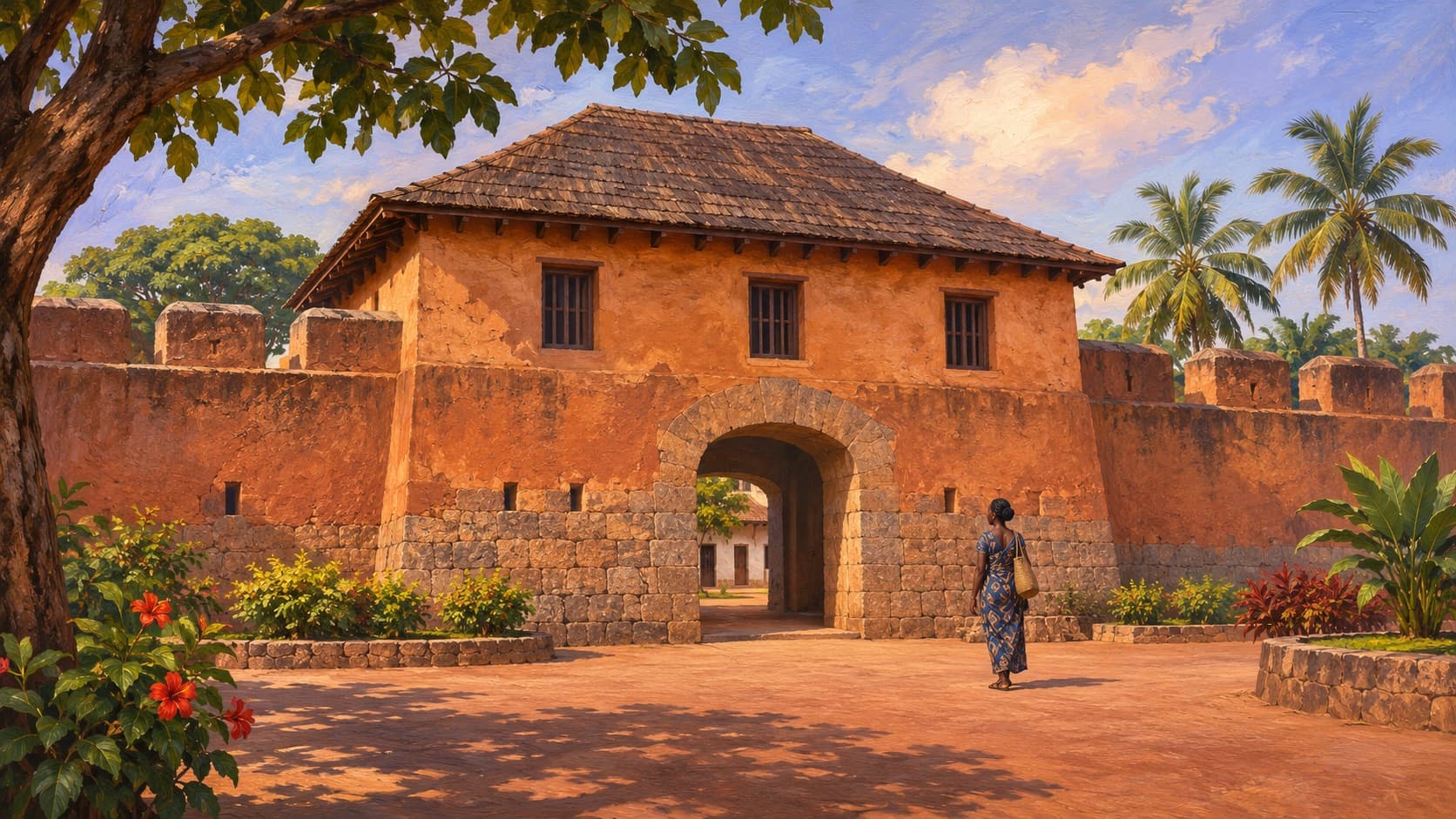
Why Kumasi Fort matters
GMMB says the first Kumasi Fort was built in 1820 by Asantehene Osei Tutu Kwamina, modeled on coastal forts built by European merchants. It says British forces destroyed it in 1874 and that it was rebuilt in 1897 with granite and brown soil carried from Cape Coast by porters. Those dates give the building a precise place in the history of the Asante Kingdom and British colonial expansion; they should not be reduced to an action-story version of the past.
The fort is also connected to the 1900 Asante uprising widely known as the Yaa Asantewaa War. GMMB records that it was encircled in March 1900 and identifies Ohemaa Yaa Asantewaa, Queen Mother of Ejisu, as the rebellion’s leader. A visitor does not need to perform solemnity, but should make room for the fact that this history includes resistance, imprisonment, exile, and unequal colonial power. Read the displays, ask a guide what they are comfortable explaining, and avoid making jokes, battle poses, or costume content from a place of painful memory.
GMMB says the fort was converted into a museum between 1952 and 1953. Its listed collection includes military equipment, medals, armoured cars, anti-aircraft guns, photographs, portraits, and objects associated with the colonial-era Gold Coast Regiment through the present Ghana Armed Forces. What is on view can change, so let the current displays—not an old itinerary—shape your visit.
- Best for: travelers interested in Asante history, Ghanaian military history, museums, and a deeper Kumasi cultural day.
- Not a substitute for: the Manhyia Palace Museum, which has its own royal-history focus and visitor arrangements.
- Plan for: a guided, respectful visit rather than unrestricted access to a barracks or a fixed self-guided route.
Hours, fee, and the checks to make before leaving
GMMB currently lists the museum’s public hours as 8:00am to 5:00pm, excluding Sundays and public holidays, and its guided-tour price as GH¢5. These are the institution’s published details, verified for this guide on 4 November 2026; they are not a guarantee for a future date. Before departure, contact GMMB and ask whether the museum is receiving visitors, whether the listed tour and fee still apply, the correct entrance or meeting point, and whether there are any restrictions that day.
Groups should ask early. The GMMB museums page says groups at its museums should not exceed 70 people at one time and that school tours should be scheduled in writing three weeks in advance. Because the fort is inside Uaddara Barracks, a school, diaspora group, film crew, or large family should also ask about identification, arrival procedure, photography, accessibility, toilets, and the number of people a guide can receive. Do not assume that a museum entry rule covers security access to a military premises.
For a smooth Kumasi day, avoid building the fort around a tight flight, intercity-bus arrival, or ceremony appointment. Share your confirmed museum window, pickup area, group size, and pace at /plan. SankofaGo can help put transport and nearby stops into a realistic order; GMMB and the relevant authorities remain the source of truth for entry, tours, fees, and on-site rules.
Respectful museum and military-site etiquette
Follow every instruction from museum staff, guides, and security personnel promptly. Stay with your guide where directed, keep bags and hands away from displays, and do not touch objects, vehicles, plaques, or historic fabric unless invited. A heritage site can be both a museum and part of an active institutional environment; visitors should not test boundaries, enter side areas, or treat an access point as a negotiation.
Ask before taking any photograph or video. Permission for a personal image of an exhibit is not permission to photograph guards, visitors, barracks facilities, vehicles, security features, or a guide. Drones, tripods, interviews, livestreams, and commercial shoots need separate advance approval. If photography is not allowed, keep the experience with you through notes and careful observation rather than trying to capture it covertly.
Language matters too. Use the names and framing supplied by the museum and Ghanaian historical sources; avoid calling Asante history a footnote to a colonial adventure. If a guide corrects a term, date, or assumption, thank them and adjust. The most valuable souvenir from a place like this is a more accurate understanding of Kumasi, not a dramatic image.
- Bring: water for the wider day, a charged phone, and identification if the museum advises it.
- Wear: comfortable, modest clothing and shoes suitable for walking; follow any same-day security guidance.
- Ask first: about photos, filming, groups, accessibility, donations, guide availability, and whether a particular display is open.
Build a Kumasi heritage day without rushing it
GMMB notes that the Prempeh Museum, Kumasi Cultural Centre, Kumasi Zoo, and Kumasi Central Market are within walking distance of the fort. Walking distance does not mean a single universal opening schedule, ticket, or photography policy. Choose one or two confirmed stops, allow time for traffic and meals, and check each destination separately. A shorter day with time to listen is often more useful than a checklist of five sites.
If royal history is your priority, read our /blog/manhyia-palace-museum-kumasi-guide before arranging Manhyia Palace Museum. If you want crafts and market context, our /blog/kejetia-market-kumasi-shopping-guide and /blog/ntonso-adinkra-cloth-village-guide are better starting points. Each place has different custodians and protocols; the connection is a fuller Kumasi itinerary, not permission to expect the same rules everywhere.
The British Military Cemetery is, according to GMMB, about 200 metres northwest of the museum and contains graves of British casualties from the Yaa Asantewaa War. Treat a cemetery as a memorial space, not an add-on photo stop. Confirm that it can be visited and the appropriate way to approach it before including it in your day.
A practical brief makes the history easier to meet
Send a simple, useful enquiry: your visit date, arrival window, number of people, contact number, country of residence if relevant to admissions, accessibility needs, and whether anyone intends to photograph or film. Ask for the current fee, payment method, guide process, and any current security instructions. That is more respectful—and more reliable—than arriving with a screenshot of an old price or an expectation that every historic site operates like a ticketed attraction.
If access changes, accept it without pressing staff for an exception. Re-route to a confirmed cultural stop, a meal, or rest time and preserve the fort for another visit. For a personalized Kumasi route that allows for live conditions, begin a free trip brief at /plan. SankofaGo can help connect your confirmed visits with transport and overnight choices, so you can spend your attention on the history rather than on a rushed transfer.
Frequently asked questions
Where is Kumasi Fort and Military Museum?
GMMB places it in Uaddara Barracks in Kumasi, the capital of Ghana’s Ashanti Region. Confirm the current entrance, meeting point, and arrival procedure directly with GMMB before you set out.
What are Kumasi Fort and Military Museum’s hours and tour fee?
GMMB currently lists 8:00am to 5:00pm, except Sundays and public holidays, and a GH¢5 guided tour. Verify the current hours, price, payment method, and access arrangements with GMMB for your date, as they can change.
What is the connection between Kumasi Fort and Yaa Asantewaa?
GMMB says the fort was encircled during the March 1900 Asante uprising and identifies Ohemaa Yaa Asantewaa, Queen Mother of Ejisu, as its leader. It also says she was briefly imprisoned in the fort before exile in the Seychelles.
Can I take photos at Kumasi Fort and Military Museum?
Ask for clear permission first and follow same-day instructions from museum staff and security. Do not assume permission for photography, video, drones, tripods, interviews, barracks facilities, guards, visitors, or commercial use.
Can SankofaGo help plan a Kumasi museum day?
Yes. Start at /plan with your dates, pickup point, group size, pace, and interests. SankofaGo can help arrange the wider itinerary around confirmed visits; GMMB and relevant authorities confirm admission, access, guides, fees, and photography rules.
Sources & further reading
Ready to see it for yourself?
Plan your Ghana trip free with Nana, our AI planner — then our team books every car, hotel, and guide. You just confirm, pay, and go.
Start planning — it's free