
Nakore Mosque Guide: Wa Heritage, Faith & Respectful Planning
The short answer: Nakore Mosque is a living Islamic heritage site near Wa in Ghana’s Upper West Region, best visited with patience, modest dress, and permission-led expectations. Ghana Tourism Authority identifies Nakore Ancient Mosque as one of the region’s key attractions, while the Ghana Museums and Monuments Board includes it among Ghana’s ancient northern mosques. Go to learn from the community and observe the building’s Sudano-Sahelian form—not to assume a fixed opening time, entry fee, photography right, interior access, or tour. Confirm arrangements locally before you leave Wa, and let worship and community direction come first.
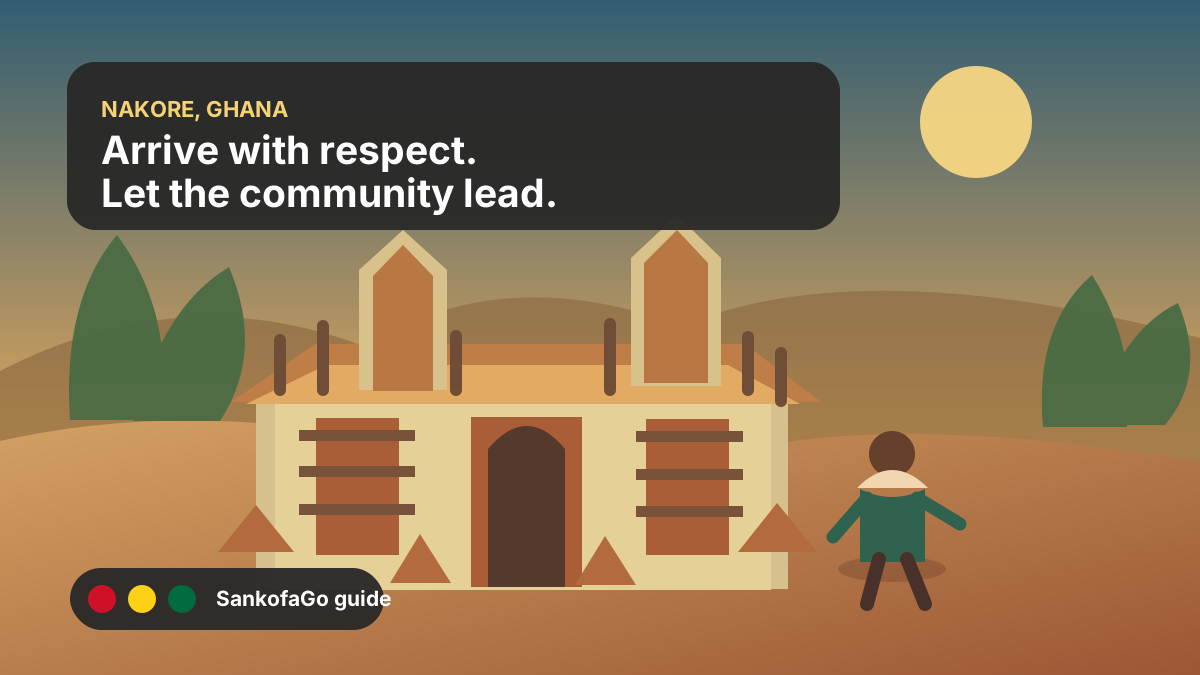
What Nakore Mosque is—and why the visit needs care
Nakore Mosque sits in Ghana’s Upper West Region near Wa. Visit Ghana names it among the region’s major attractions, alongside Wa Naa’s Palace, the Gwollu Slave Defence Wall, the Wechiau Hippo Sanctuary, and Gbelle Game Reserve. That listing makes it a meaningful stop on a wider Upper West route, but it should not turn a place of worship into a checklist item. The mosque’s first purpose is religious and communal; a visitor’s schedule comes second.
The Ghana Museums and Monuments Board lists Nakore among the ancient mosques of northern Ghana, and Visit Ghana describes its architecture as Sudanic or Sudano-Sahelian: a rectangular, mud-built form with timber structure, irregular buttresses, and pyramidal elements associated with the minaret and mihrab. These details are useful for noticing the craft in front of you. They are not a license to climb, touch, lean equipment on walls, or treat repairs as a backdrop.
Published accounts disagree about the mosque’s exact age. Rather than repeat an uncertain date, it is more accurate to say that Nakore is an historic mosque in a region shaped by long-standing Islamic and trade connections. Ask a local host or authorised guide what history they want visitors to hear, and keep clear that a community account and an online summary may use different language or emphasis.
- Best for: travelers already giving Wa and the Upper West enough time for an unhurried, learning-led heritage stop.
- Not a promise of: a published opening schedule, fee, interior entry, prayer access, guide, restroom, parking, photography permission, or current road conditions.
- Search-intent match: visiting Nakore Mosque near Wa—not a replacement for our Larabanga Mosque, Wechiau Hippo Sanctuary, or Paga heritage guides.
Plan the Wa stop before you set out
Start in Wa with a confirmation mindset. Ask a trusted local contact, your accommodation, or the appropriate local tourism office whether a visit is suitable on your chosen day, whether there is a person to speak with on arrival, and whether the community has any current guidance. Do not infer availability from a map pin, an old review, a social post, or another traveler’s video. Religious calendars, community events, repairs, weather, and family responsibilities can change what a respectful visit looks like.
Give the stop a flexible part of the day rather than a minute-by-minute slot between long road transfers. Arrive quietly, park only where directed, and be prepared to leave or wait if prayer, a community gathering, or maintenance takes priority. Bring drinking water and sun protection for yourself, but do not assume there will be a visitor facility, shop, cash point, or a place to change clothes nearby.
Mid-article planning note: start at /plan and ask Nana for a “Wa and Nakore heritage route.” Share your arrival city, travel date, group size, overnight base, mobility needs, clothing or prayer considerations, photography plans, and whether you want to pair Nakore with Wa Naa’s Palace, Dondoli, Wechiau, or a slower Upper West stay. SankofaGo can shape transport and timing options; the mosque community and local custodians decide access, fees, guides, and permissions.
Dress, greeting, and prayer-time etiquette
Dress modestly and choose clothing that keeps shoulders, knees, and torso respectfully covered. Bring a light layer if it helps you adapt, remove footwear only if you are specifically asked, and follow any local instruction on where women, men, children, or visitors should stand. There is no universal visitor script that overrides the people hosting you.
Begin with a greeting and a clear reason for your visit. Ask whether this is a good time, who you should speak with, and what areas you may enter or view. If you are invited to learn, listen more than you explain. If you are not invited inside, accept the answer warmly. An exterior visit, a conversation, or a decision to return another time can still be the right outcome.
Avoid arriving during prayer expecting a tour. If prayer begins, lower your voice, move only where directed, and do not make the moment about your schedule. Muslim travelers who wish to pray should also ask locally rather than assuming visitor status or an online description settles the arrangement.
Photography: ask once, then follow the answer
Historic architecture can make people reach for a camera quickly. Pause first. Ask before photographing the mosque, people, children, worshippers, any interior, a prayer activity, repair work, or a close-up of a person’s belongings. A yes to one wide exterior image is not a yes to close-ups, video, a drone, livestreaming, commercial use, or posting someone’s name and location in real time.
Keep bags, tripods, lights, microphones, and drones packed unless you have specific approval. They can block paths, distract from worship, and create a very different experience from a quiet personal visit. Do not fly a drone because there is open sky; Ghana’s aviation and community permissions are separate questions, and the existing Ghana Drone Rules for Travelers guide explains why an informal assumption is not enough.
If a host says no, thank them and put the camera away without bargaining. You can still make notes after the visit, buy a locally approved publication where available, or use your own words to describe what you learned. The more respectful image is sometimes the one you do not take.
Build a route that is more than one building
Nakore works best as one chapter of an Upper West journey, not as a rushed detour from a far-away airport. Visit Ghana identifies Wa as the regional capital and points to heritage, wildlife, craft, and community attractions across the region. The practical question is not “How many pins can we fit?” but “How much time can we give each place without arriving exhausted or placing access pressure on hosts?”
For a Wa-focused day, choose one or two additional priorities and leave buffers for meals, heat, conversations, and changed plans. A wider route could add Wa Naa’s Palace or another confirmed heritage stop; travelers with more days may consider Wechiau or the Gwollu area only after checking the route and overnight logistics. Do not treat distances on a screen as a guarantee of road condition, travel time, fuel availability, or opening arrangements.
When you are ready, use /plan with “Nakore Mosque” in your notes. Tell Nana your dates, first and last overnight, where you are arriving from, the pace that feels good, and whether faith, architecture, family history, wildlife, or food is the main thread. SankofaGo can help make the route realistic while leaving local communities in charge of their own spaces.
A useful standard for heritage travel
The best test for a Nakore visit is simple: would your plan still feel respectful if you came away with no interior photographs, no fixed tour, and less access than you expected? If the answer is yes, you are arriving with the right flexibility. Heritage travel is stronger when it leaves room for people who live with a place every day.
Support the route in ways the community welcomes: pay any confirmed charge directly through the appropriate channel, buy food or services from local businesses when practical, and ask before making a donation. Do not assume a contribution, gift, or online booking gives you extra access. Clear, consent-based arrangements protect both your time and the mosque’s dignity.
Nakore offers a chance to see how faith, architecture, climate, materials, and regional history meet in one setting. Treat that as an invitation to learn slowly. The goal is not to collect proof that you were there; it is to leave having made the visit easier, rather than harder, for the people who keep the place alive.
Frequently asked questions
Where is Nakore Mosque in Ghana?
Nakore Mosque is in Ghana’s Upper West Region near Wa. Ghana Tourism Authority lists Nakore Ancient Mosque among the region’s key attractions, and the Ghana Museums and Monuments Board includes it among the ancient mosques of northern Ghana. Confirm the exact meeting point and route locally before departure.
Can non-Muslims enter Nakore Mosque?
Do not assume interior access. Ask the appropriate local host or custodian on the day, follow their answer, and be prepared for an exterior-only visit. Prayer and community use come before tourism.
Can I take photographs at Nakore Mosque?
Only with specific permission. Ask before photographing the building, people, worshippers, children, any interior, prayer activity, repairs, video, drones, or commercial equipment. Follow any restriction immediately and without negotiation.
What is Nakore Mosque known for?
It is known as a historic northern Ghana mosque with Sudano-Sahelian or Sudanic architectural features. Official Ghana tourism and heritage sources describe the regional setting and characteristic mud, timber, buttress, minaret, and mihrab forms. Exact age claims differ across published accounts, so this guide does not present one as settled fact.
Can SankofaGo help plan a Nakore Mosque visit?
Yes. Use /plan with your dates, arrival point, group size, Wa overnight, mobility needs, photography plans, and nearby interests. SankofaGo can prepare timing and transport options; mosque custodians and the community set final access, fees, guide arrangements, and permissions.
Sources & further reading
Ready to see it for yourself?
Plan your Ghana trip free with Nana, our AI planner — then our team books every car, hotel, and guide. You just confirm, pay, and go.
Start planning — it's free