
Ahwiaa Wood Carving Village Guide: Stools, Crafts & Route Tips
The short answer: Ahwiaa is the Kumasi-area craft stop to choose when you want to see Asante wood carving up close, especially stools, drums, figures, staffs, and carved souvenir pieces. Official Ashanti and Kwabre East planning documents identify Ahwiaa as a craft village and woodcarving site in the Kwabre East area near Kumasi, while Visit Ghana describes the Ashanti Region as a place where artisan villages around Kumasi are known for woodcarving and kente weaving. Go with a trusted driver, cash, photo permission, enough time to watch work behind the shopfronts, and a buying plan that respects both the maker and Ghana's rules around cultural property.
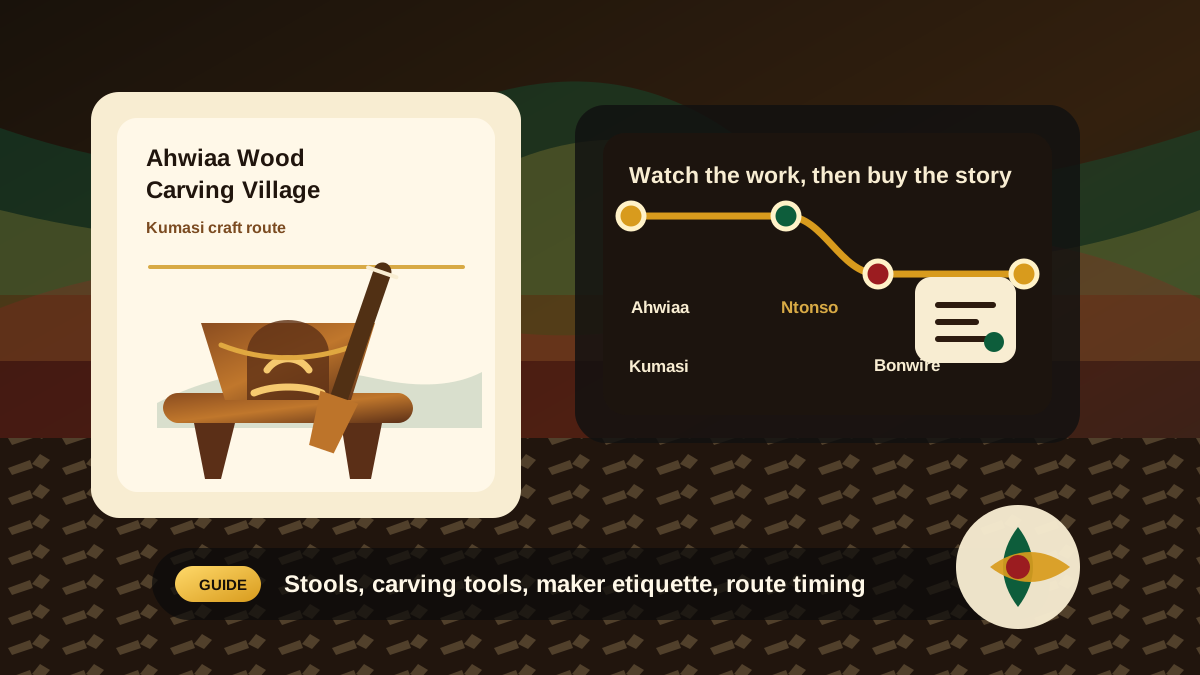
The quick answer: Ahwiaa is for carving, not cloth
This guide continues SankofaGo's Kumasi craft-village coverage after Kejetia Market and Ntonso Adinkra Cloth Village, but it answers a different travel question. Kejetia is about a huge working market. Ntonso is about adinkra symbols, dye, and stamped cloth. Bonwire and Adanwomase are about kente weaving. Ahwiaa is about wood: carving, sanding, finishing, buying, and understanding what an object is before it goes into your suitcase.
A good Ahwiaa visit is not just a stop at roadside shelves. The better version is slower: greet, ask what is being carved, watch tools move through wood, learn which objects are decorative and which carry cultural meaning, then buy something whose story you can repeat honestly when you get home.
- Best fit: culture-focused Kumasi travelers, diaspora visitors, craft buyers, students, designers, families, and travelers building an Asante craft-village day.
- Plan around: workshop access, cash, traffic north of Kumasi, photo consent, object size, luggage limits, fair bargaining, cultural-property caution, and whether Ntonso, Bonwire, Manhyia, or Kejetia belongs in the same route.
- Do not assume: every piece is old, every mask is Asante, every workshop is open when you arrive, every maker wants photos, or a carved stool is just ordinary furniture.
- Search intent match: this is an Ahwiaa Wood Carving Village visitor guide, not a general Kumasi itinerary or another adinkra/kente article.
What official sources say about Ahwiaa
The Ashanti Regional Coordinating Council's regional profile lists "Craft Village at Ahwiaa" among Kwabre East tourism sites, alongside kente weaving at Ntonso, Asonomaso, and Adanwomase. That places Ahwiaa inside the same broader Kumasi craft landscape many travelers try to understand in one or two days.
A Kwabre East District Assembly composite budget document also names Ahwiaa woodcarving among the district's tourist sites, and says the district is well known for traditional textiles and wood carving in different styles and shapes, with local products sold directly to tourists on wholesale and retail terms.
Visit Ghana gives the wider regional frame: Ashanti is associated with craftsmanship and cultural traditions, Kumasi is the regional capital, and villages around Kumasi are known for artisan crafts including woodcarving and kente cloth weaving. For planning, the practical takeaway is simple: Ahwiaa is a focused craft stop near Kumasi, best understood as part of an Asante maker route rather than an isolated souvenir shop.
What to look for when you arrive
Look for process before product. A finished carving may be polished, painted, stained, or aged to look more dramatic, but the most valuable part of the visit is seeing how an object begins: a block of wood, a stool form, a figure outline, a drum shell, a staff head, a sanding rhythm, a maker explaining what the shape means.
Ask plain questions: What is this object called? Who usually uses it? Is it decorative or ceremonial? Was it made here? How long did it take? What wood was used? Can it travel in a suitcase without cracking? Does it need oiling, wrapping, or special care?
Those questions protect you from two disappointments. First, you avoid buying a generic tourist object while thinking it is an old Asante piece. Second, you avoid treating culturally loaded objects as anonymous decor. Ahwiaa rewards curiosity more than speed.
Stools need extra respect
Many travelers notice carved stools first because the form is beautiful, compact, and easy to imagine at home. In Akan and Asante culture, though, stools can carry meanings of authority, belonging, office, lineage, and spiritual identity. A decorative stool made for sale is not the same as a sacred or chiefly stool, but the shape still deserves context.
Before buying, ask whether the stool is decorative, whether any symbol or form has a specific meaning, and whether the maker recommends it for sitting, display, gifting, or ceremony-inspired decor. If a seller presents something as an antique, sacred object, palace object, shrine object, or old stool with unclear origin, slow down.
Ghana Museums and Monuments Board says it controls the export, import, sale, and change of ownership of material cultural property through licensing and permits, and its rules include the export and sale of antiquities. That does not mean every new souvenir needs a museum permit. It does mean travelers should avoid suspicious "antique" claims and ask GMMB or a reputable expert before attempting to export anything represented as old, sacred, excavated, or culturally protected.
How to buy without flattening the craft
Bring Ghana cedi cash, small notes, patience, and realistic luggage expectations. Wood is bulkier than cloth, and a cheap-looking object may still represent hours of handwork, tool wear, transport, finishing, rent, and family income. Bargain politely if bargaining is welcome, but do not turn the conversation into a contest where the maker has to defend the value of his own labor.
If you want a custom piece, ask about timeline, deposit, pickup, delivery to your hotel, finishing smell, drying time, and whether it can be packed safely for international travel. A piece that looks ready on a table may need more time before it should be wrapped tightly or put into a suitcase.
Designers, photographers, and content creators should be especially careful. If you are collecting reference images, planning a commercial product, or filming for monetized content, say so. Buy fairly, ask permission, credit accurately where appropriate, and do not treat workshop knowledge as free raw material.
How to pair Ahwiaa with other Kumasi craft stops
Ahwiaa pairs naturally with Ntonso when you want a north-of-Kumasi craft route: woodcarving plus adinkra symbols and stamping. It can also pair with Bonwire or Adanwomase for a fuller craft day, but kente weaving deserves its own attention and should not be reduced to a ten-minute add-on.
For travelers who want more context before shopping, start with Manhyia Palace Museum or the National Cultural Centre, then visit Ahwiaa after lunch. For travelers who already know what they want to buy, visit Ahwiaa earlier in the day while energy is high and workshops are more likely to be active.
Mid-article planning note: start at /plan and ask Nana for an "Ahwiaa wood carving route." Share your Kumasi hotel area, group size, travel date, craft interests, luggage limits, photo or filming needs, whether you want Ntonso, Bonwire, Kejetia, Manhyia, or Lake Bosomtwe nearby, and whether anyone in your group needs a slower pace.
Photos, workshops, and maker etiquette
Ask before photographing faces, hands, unfinished custom work, prices, private work yards, children, or tools in use. A shop may feel public, but a workshop is still somebody's workplace. If the answer is no, accept it warmly.
Do not pick up tools, lean on unfinished pieces, block a maker's light, or interrupt a delicate cut for a better video angle. If you want a demonstration, ask how to support it: buy a small piece, tip the maker, or pay for a guided visit where demonstration time is clearly included.
The best visitor posture is simple: greet first, listen more than you talk, ask what an object means, buy directly when you can, and leave with the maker's name or shop name if they are comfortable sharing it. That turns a transaction into a relationship, even if it lasts only one afternoon.
Safety, timing, and road comfort
The U.S. Department of State Ghana advisory dated July 7, 2026 rates Ghana at Level 2, Exercise Increased Caution, citing crime, poor health infrastructure, violence against women, and violence against lesbian and gay travelers. It also advises travelers to stay aware, keep a low profile, avoid displaying signs of wealth, and stay alert in tourist spots.
GOV.UK warns that robberies, burglary, serious assault, pickpocketing, bag-snatching, and vehicle crime can affect travelers in Ghana, and advises avoiding large sums of money, keeping valuables secure, and being particularly careful after nightfall. It also advises daylight travel for longer trips outside major cities.
For Ahwiaa, translate that into ordinary planning: use reputable transport, keep your phone and wallet secure in crowded shop areas, carry water, protect daylight for the drive back, and avoid flashing large cash bundles while negotiating. If your group includes children, elders, mobility needs, or a same-day flight, keep the craft route tight rather than stacking every possible Kumasi stop.
How SankofaGo can help
Ahwiaa is exactly the kind of stop where SankofaGo can make a craft day feel thoughtful instead of improvised. We can help decide whether woodcarving belongs with Ntonso, Bonwire, Adanwomase, Manhyia Palace Museum, Kejetia, the National Cultural Centre, Lake Bosomtwe, or a quieter Kumasi reset.
We can also help with trusted driver timing, guide expectations, workshop checks, photo etiquette, fair buying reminders, luggage planning, cultural-property caution, and the small but important question of how to bring something meaningful home without stripping away its context.
When you are ready, compare support levels at /pricing, then use /plan with "Ahwiaa Wood Carving Village" in your notes. Tell Nana whether you want a focused carving visit, a Kumasi craft-village day, a buying-focused route, a student-friendly maker tour, or a broader Asante culture itinerary with enough room for each stop to matter.
Frequently asked questions
Where is Ahwiaa Wood Carving Village?
Ahwiaa is in the Kwabre East area near Kumasi in Ghana's Ashanti Region. Official regional and district documents identify Ahwiaa as a craft village and woodcarving tourist site.
What is Ahwiaa known for?
Ahwiaa is known for woodcarving, including stools, drums, figures, staffs, and decorative craft pieces. It is best planned as a Kumasi-area maker visit rather than only a souvenir-shopping stop.
Can I pair Ahwiaa with Ntonso or Bonwire?
Yes. Ahwiaa pairs well with Ntonso for woodcarving plus adinkra cloth, or with Bonwire and Adanwomase for a broader craft day. Keep the schedule realistic so each craft gets proper attention.
Should I buy a carved stool in Ahwiaa?
You can, but ask what the stool form means, whether it is decorative, how it should be used or displayed, and whether there are any cultural-property concerns. Avoid suspicious antique or sacred-object claims.
Can I take photos in Ahwiaa workshops?
Ask first before photographing artisans, tools, unfinished pieces, children, private work areas, or prices. A purchase, tip, or guided arrangement is often the fairest way to support demonstration time.
Do I need to worry about export rules for wood carvings from Ghana?
Ordinary new souvenirs are different from antiquities, but GMMB regulates the export and sale of material cultural property and antiquities. If a piece is described as old, sacred, excavated, or culturally protected, get expert guidance before buying or exporting it.
Can SankofaGo plan an Ahwiaa Wood Carving Village visit?
Yes. SankofaGo can build Ahwiaa into a Kumasi craft route with driver timing, workshop checks, Ntonso or Bonwire pairings, buying goals, luggage planning, and respectful photo guidance.
Sources & further reading
- Ghana Tourism Authority / Visit Ghana - Ashanti Region
- Ashanti Regional Coordinating Council - Regional Profile Ashanti
- Ministry of Finance - Kwabre East District Assembly composite budget
- Ghana Museums and Monuments Board - About Us
- Ghana Museums and Monuments Board - Rules and Regulations
- U.S. Department of State - Ghana Travel Advisory
- GOV.UK - Ghana safety and security travel advice
Ready to see it for yourself?
Plan your Ghana trip free with Nana, our AI planner — then our team books every car, hotel, and guide. You just confirm, pay, and go.
Start planning — it's free