
Ghana Food Allergy Travel Guide: Peanuts, Fish & Safe Meals
The short answer: Ghana can be a rewarding food trip for travelers with allergies, but severe allergies need advance planning, not improvisation at a chop bar after a long drive. CDC advises travelers with food allergies to pack medicines such as epinephrine, bring translated allergy cards, ask about ingredients, avoid foods with unclear labels, and carry an auto-injector for all activities. In Ghana, build meals around clear ingredient checks, trusted kitchens, road-day backup food, hotel communication, emergency numbers, and a route that does not force risky last-minute eating.
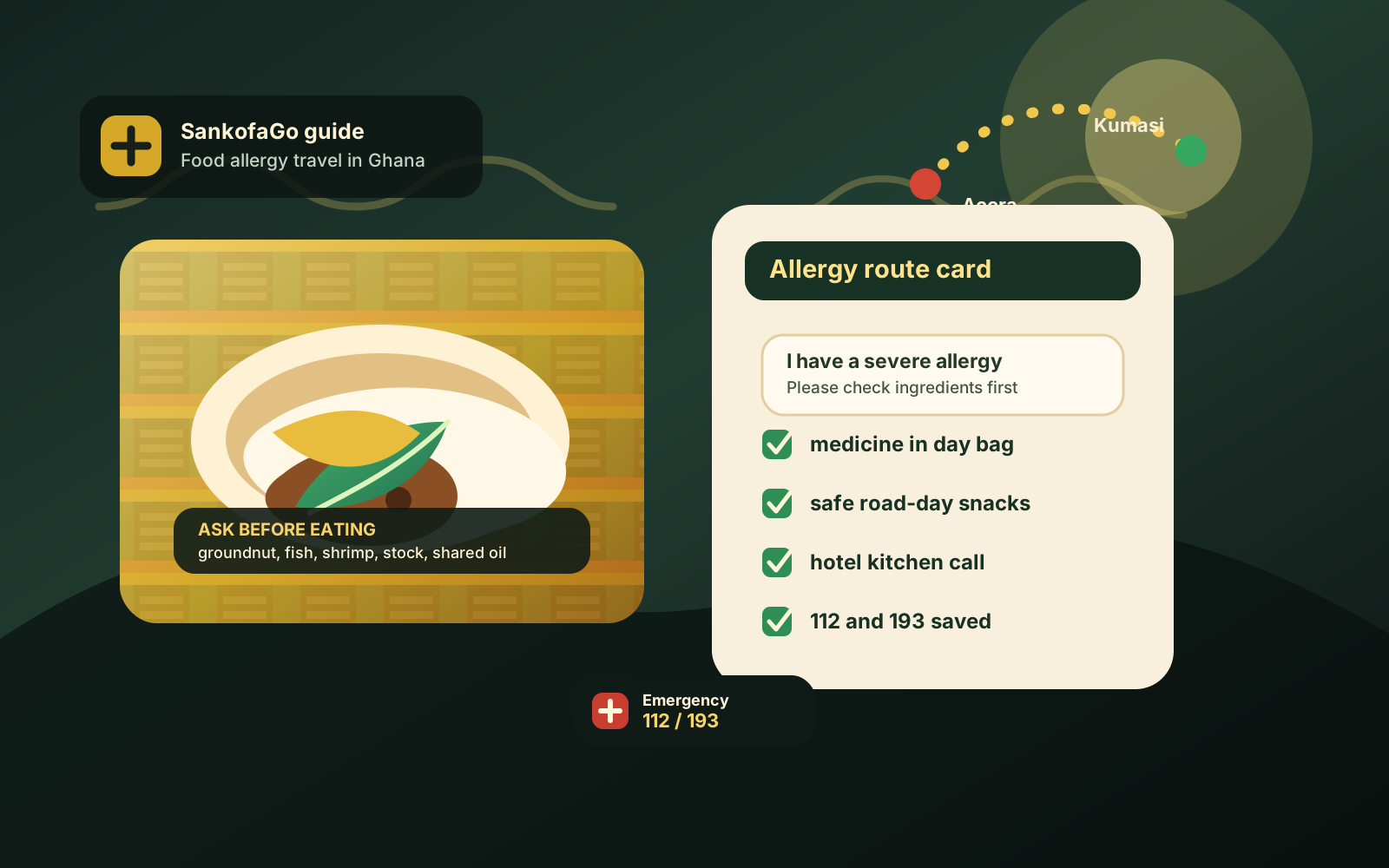
The quick answer: plan food like transport
This guide is different from SankofaGo's Ghana food guide, vegetarian and vegan Ghana guide, prescription medicine guide, travel insurance guide, and emergency numbers guide. The search intent here is narrower: how should a traveler with peanut, tree nut, fish, shellfish, egg, milk, sesame, wheat, soy, or other serious food allergies eat in Ghana without turning every meal into a gamble?
The answer is to plan food with the same seriousness as drivers and hotels. Decide which meals must be controlled, which kitchens need advance notice, which foods are no-go, which snacks travel with you, and which emergency steps the group will follow if a reaction happens.
- Best fit: travelers with severe food allergies, parents of allergic children, group leaders, diaspora visitors staying with family, and travelers combining Accra, Cape Coast, Kumasi, Volta, northern Ghana, or beach routes.
- Plan around: epinephrine and medicine access, chef cards, hotel breakfasts, restaurant calls, family-host communication, street-food limits, long road days, packaged snacks, emergency numbers, and medical-care distance.
- Do not assume: a sauce is safe because it looks plain, a restaurant can handle cross-contact on arrival, shito is always fish-free, groundnut soup can be made peanut-free, or every roadside stop can answer allergy questions reliably.
- Search intent match: this is a Ghana food allergy travel planning guide, not a restaurant directory, medical diagnosis page, or general Ghana cuisine introduction.
What CDC says allergic travelers should do
CDC's traveler allergy guidance says to pack allergy medicines such as inhalers and epinephrine, bring allergy cards, bring copies of an emergency response plan, ask about ingredients, check labels, avoid street food when ingredients cannot be reliably checked, and carry the auto-injector for all activities even when you do not expect to eat.
CDC Yellow Book guidance for severely allergic travelers adds that pre-travel care should include a review of allergens and medications, enough prescriptions for the trip, an updated anaphylaxis action plan, correct use of injectable epinephrine, and original packaging that links medicine to the traveler. It also warns that injectable epinephrine is not easily available in more than half the countries of the world, concentrated in Africa, Central America, South America, and Asia.
That does not mean Ghana is off-limits. It means a severe allergy traveler should arrive with the plan already in hand: medicines on the person, backups in carry-on, companions briefed, emergency numbers saved, and a food strategy that avoids asking an unfamiliar kitchen to solve everything at the table.
Ghanaian food allergy risk points to ask about
Ghanaian food is diverse, generous, and deeply regional. The National Commission on Culture describes Ghanaian meals as often built around a starchy staple with a sauce or soup containing a protein source, and notes that many meals include fish because fishing is a major activity. It also names groundnut soup, fried fish, okro, red red, kenkey with fish, palm nut soup, fufu, and other regional dishes.
For allergy planning, that means the risk is often in the soup, stew, pepper sauce, stock, garnish, shared spoon, or frying oil rather than the visible starch. Banku, kenkey, rice, yam, plantain, fufu, or omo tuo may look simple, but the sauce beside them can carry fish, smoked fish, shrimp, groundnut, egg, dairy, or other ingredients depending on the cook.
Useful Ghana-specific questions include: Does this soup contain groundnut or peanut? Does this shito contain fish or shrimp? Was the stew cooked with smoked fish, dried fish, or stock? Was this plantain fried in the same oil as fish or meat? Can this meal be made separately, or is the sauce already cooked?
Peanuts, groundnuts, fish, and shellfish need plain language
In Ghana, many people say groundnut where Americans may say peanut. If you have a peanut allergy, use both words: "I am allergic to peanuts and groundnuts." Do not rely on only one term, and do not assume a cook will understand that a small amount can matter medically.
Fish and shellfish questions also need detail. A dish may not show a whole fish but can still include smoked fish, dried fish, powdered shrimp, prawns, stock, or fish-based shito. If your allergy is severe, ask about ingredients and cross-contact before ordering, and choose kitchens that can answer without guessing.
A simple allergy card can help: "I have a severe allergy. I cannot eat peanuts/groundnuts, fish, shrimp, or food cooked with them. Even a small amount can make me very sick. Please tell me if you are not sure." English is widely used in Ghana, but clear written cards still help in noisy restaurants, family homes, and road stops.
Restaurants, hotels, family homes, and street food
CDC advises allergic travelers to avoid street food when there is no reliable way to check ingredients. That advice matters in Ghana because roadside and market food can be excellent but fast-moving. The person serving may not be the person who cooked the sauce, and a busy vendor may not be able to verify every ingredient or shared utensil.
Hotels, larger restaurants, and kitchens contacted before arrival are usually easier for severe allergies because there is more time to brief staff. Still, do not assume a menu note is enough. Ask who will cook the meal, whether a separate pan or clean surface is possible, and whether the sauce or stew base was prepared earlier with the allergen.
Family visits need tenderness and clarity. Ghanaian hospitality often expresses love through food, so explain the allergy before the trip, not when a host has already cooked. Thank the host, name the medical risk plainly, and offer safe alternatives: fruit you can peel, plain rice if safe, sealed packaged snacks, or a meal you help arrange in advance.
Build a safe food rhythm into the itinerary
The biggest allergy mistakes happen when people are tired, hungry, and far from the kitchen they meant to use. Protect arrival day, long drives, heritage days, nature routes, festival days, and late hotel check-ins with safe backup food. CDC also recommends bringing safe snacks or meals for flights and airports.
For Ghana, pack enough personal safe snacks for each transfer day, plus extra in case traffic, rain, ferry timing, flight delays, or family visits stretch the day. Keep them in your day bag, not buried in checked luggage or the back of the car.
Mid-article planning note: start at /plan and ask Nana for a "Ghana food allergy route." Share the exact allergens, severity, epinephrine needs, preferred cities, hotel plans, family visits, road days, children or elders in the group, and whether you want restaurants checked before arrival. SankofaGo can shape the logistics while your clinician handles the medical plan.
Medicine, documents, and emergency numbers
Keep epinephrine, inhalers, antihistamines if prescribed, an emergency action plan, a clinician letter, prescriptions, and allergy cards on your person or in immediately accessible carry-on luggage. CDC Yellow Book specifically advises keeping medications immediately accessible in transit and keeping injectable epinephrine in original packaging with identifying information.
Save Ghana emergency numbers before the trip. NADMO lists 112 as the national emergency number free from all networks and also lists police 191, fire 192, and ambulance 193. The National Ambulance Service FAQ says NAS provides emergency ambulance transportation and pre-hospital emergency medical care, and asks callers to give the exact location, nature of the emergency, number of patients, condition, and landmarks.
For an allergy emergency, your group should know where the epinephrine is, how to use it, which number to call, where the nearest hospital or clinic is, and how to describe your exact location. A GhanaPostGPS address, hotel name, nearby landmark, and driver phone number can save time when stress is high.
How SankofaGo can help without pretending to be a doctor
SankofaGo cannot diagnose allergies, prescribe medicine, guarantee allergen-free kitchens, or replace a travel-health clinician. What we can do is make the trip structure less risky: fewer surprise meals, better hotel questions, advance restaurant calls, realistic road timing, driver coordination, medical-location awareness, and a plan for family-host communication.
We can also help mixed groups. One traveler may need strict allergen avoidance while others want chop bars, street food, beach fish, market snacks, or family meals. The route can respect both realities by choosing controlled meals at key moments and optional food exploration where it does not pressure the allergic traveler.
When you are ready, compare support levels at /pricing, then use /plan with "food allergy" in your notes. Tell Nana the allergens, severity, medicine requirements, comfort level with restaurants, cities, family visits, and any meals you are nervous about. We will help make the Ghana food plan calm, respectful, and practical.
Frequently asked questions
Can I travel to Ghana with a peanut allergy?
Yes, but severe peanut allergy travel needs planning. Use both words, peanut and groundnut, carry prescribed medicine and epinephrine, bring allergy cards, ask about soups and sauces, and avoid meals when ingredients cannot be checked reliably.
Is groundnut the same as peanut in Ghana?
Groundnut commonly refers to peanut in Ghanaian food contexts. If you have a peanut allergy, say peanut and groundnut together so the risk is clear.
Does Ghanaian food contain fish or shrimp?
Many Ghanaian meals include fish, smoked fish, dried fish, shrimp, prawns, or fish-based sauces, though not every dish does. Ask about soups, stews, stock, shito, and shared oil before eating.
Should food allergy travelers eat street food in Ghana?
CDC advises allergic travelers to avoid street food when ingredients cannot be reliably checked. For severe allergies, choose kitchens that can answer ingredient and cross-contact questions clearly.
What should I pack for Ghana with food allergies?
Pack prescribed epinephrine and medicines in accessible carry-on luggage, original packaging, an allergy action plan, clinician letter if appropriate, allergy cards, safe snacks, travel insurance details, and emergency contacts.
What emergency number should I call in Ghana for an allergic reaction?
For a serious medical emergency in Ghana, call 112 or ambulance 193. Also alert your hotel, driver, guide, or local contact so someone can help responders find your exact location.
Can SankofaGo plan a Ghana trip for someone with food allergies?
Yes. SankofaGo can help with restaurant and hotel questions, road-day meal timing, family-host communication, driver coordination, emergency-contact planning, and safer itinerary pacing while your clinician manages the medical plan.
Sources & further reading
- CDC Travelers Health - Allergies and Travel
- CDC Yellow Book - Severely Allergic Travelers
- National Commission on Culture - The Ghanaian Kitchen
- Food and Drugs Authority Ghana - Food Products Guidelines
- Food and Drugs Authority Ghana - Mandate and services
- NADMO Ghana - Emergency contacts
- National Ambulance Service Ghana - FAQ
Ready to see it for yourself?
Plan your Ghana trip free with Nana, our AI planner — then our team books every car, hotel, and guide. You just confirm, pay, and go.
Start planning — it's free