
Ghana National Mosque Accra Guide: Visiting Kanda with Respect
The short answer: the Ghana National Mosque at Kanda is one of Accra's most important modern religious landmarks, but travelers should plan it as a respectful faith-site visit, not a quick architecture selfie. Go outside peak prayer pressure when possible, dress modestly, ask before entering or photographing sensitive areas, and treat Friday, Ramadan, Eid, school, clinic, and community activities as living religious life rather than tourism background.
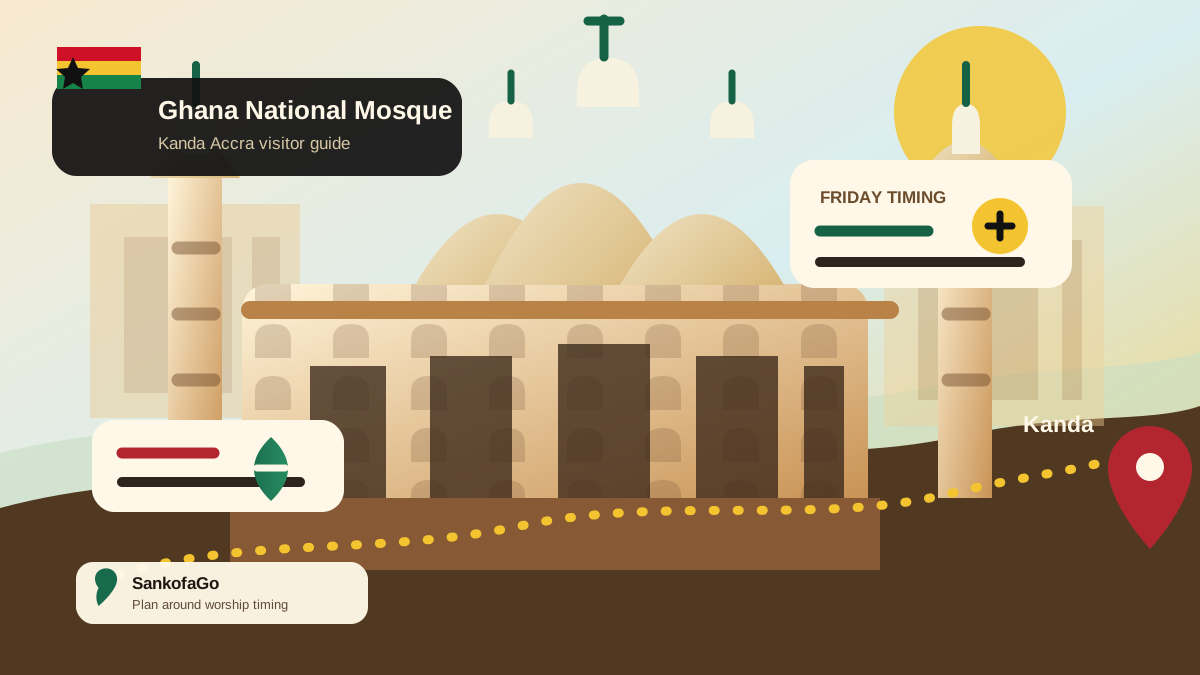
The short answer: this is Accra faith culture, not just architecture
This guide is different from SankofaGo's Muslim-friendly Ghana travel guide, Larabanga Mosque guide, Accra rainy-day guide, National Museum guide, and broader Accra itinerary posts. Those answer wider religious-comfort, northern heritage, museum, or city-planning questions. This post answers one focused search intent: how should a traveler visit the Ghana National Mosque at Kanda with practical timing and cultural respect?
The answer is to treat the mosque as both a landmark and a working religious complex. Its domes and minarets make it visually memorable, but the most important planning details are access, timing, dress, prayer rhythms, photography consent, and how the stop fits into a calm Accra day.
- Best fit: culture-curious Accra visitors, architecture travelers, Muslim travelers, interfaith groups, diaspora visitors, students, families, and travelers building a softer city day.
- Plan around: prayer times, Friday crowds, Ramadan and Eid periods, modest clothing, shoe removal where requested, same-day access confirmation, photography rules, heat, traffic, and a respectful amount of time.
- Do not assume: every space is open to visitors, tourist access is the priority during worship, drones are allowed, women and men use the same areas, or a driver can stop anywhere around the compound.
- Search intent match: this is a Ghana National Mosque Accra visitor guide, not a broad halal-food article or a history of every mosque in Ghana.
What the Ghana National Mosque is
The official Ghana National Mosque site describes the complex as the second largest mosque in West Africa and says it towers above Accra's skyline. It also says congregants observe the five daily prayers there, and that the mosque and courtyard can host well over 3,000 Muslims.
Ghana News Agency reported that President Nana Addo Dankwa Akufo-Addo commissioned the mosque on July 16, 2021. GNA described the Kanda complex as built with support from the Turkish Hudai Foundation and the Turkish government, and listed facilities including the mosque, a library, offices and residence for the Chief Imam, research facilities, a senior high school complex, clinic, administration block, auditorium, and conference centre.
That mix matters for travelers. You are not only visiting a single prayer hall. You are entering a larger community complex where worship, education, administration, health, events, youth work, and public gatherings can overlap on the same day.
Architecture, Turkey, and the Blue Mosque reference
GNA reported at commissioning that the mosque is a replica of the Ottoman-era Sultan Ahmed Mosque, widely known as the Blue Mosque, in Istanbul, and that it was built with support from Turkish partners. That does not mean Accra should be treated as a copy of Istanbul. It means visitors can read the building as a Ghana-Turkey friendship project expressed through Ottoman-inspired form, local religious life, and Accra city context.
When you look at the mosque, notice the layered domes, minarets, courtyard scale, skyline presence, and how the complex sits near busy Kanda and Nima-area movement. The architecture is striking, but the respectful visitor keeps asking what is happening there today, not only what the building resembles.
When to visit and when to slow down
For many non-worship visits, the easiest approach is to avoid arriving right as congregants are gathering for a major prayer. The mosque's services page says Friday prayer is led by His Eminence Sheikh Osman Nuhu Sharubutu, the National Chief Imam and Mufti of Ghana, with the khutba starting at 1300 GMT and prayer at 1320 GMT.
That timing is useful, but it should not be treated like a tourist showtime. Friday can be meaningful and crowded, especially around arrival and dispersal. If you are Muslim and attending prayer, arrive with humility and follow local direction. If you are not attending prayer, consider visiting at a quieter time and asking where visitors may stand, sit, enter, or photograph.
Ramadan and Eid can also change movement, access, crowd size, and the emotional tone of the compound. The mosque says Ramadan services include iftar packs, taraweeh, tahajjud, and special weekend lectures, while Eid prayers are led by the National Chief Imam and often draw senior public officials. During those periods, confirm access and expect worship needs to come first.
Dress, photos, and mosque etiquette
Dress modestly before you arrive. Travelers should cover shoulders and knees at minimum, avoid clothing that feels beachlike or nightlife-focused, and bring a scarf or layer if they may be asked for additional coverage. Shoes may need to come off before entering prayer areas, so choose footwear you can remove easily.
Ask before taking photos, especially of worshippers, women's areas, children, ablution spaces, classrooms, clinic areas, offices, funerals, weddings, security staff, or private conversations. Do not interrupt prayer for a shot. Do not step over people, point a camera into someone's face, or turn a sacred space into a backdrop while people are worshipping.
If a guide, caretaker, security person, or worshipper gives a boundary, accept it warmly. The best travel memory here is not the most dramatic photo. It is the feeling of having entered someone else's sacred and communal space with enough care that you were welcome to learn.
How to pair the mosque with an Accra day
Visit Ghana describes Greater Accra as Ghana's national-capital region and highlights Accra's museums, monuments, older districts, markets, beaches, restaurants, nightlife, and cultural stops. The Ghana National Mosque can fit into that city fabric, but it works best when the route has a clear mood.
A thoughtful pairing might include the National Museum, Kwame Nkrumah Memorial Park, Black Star Square, a calm lunch, Nima or Kanda context with a knowledgeable local guide, Accra art galleries, or a hotel reset before evening plans. Avoid stacking the mosque between sweaty shopping, nightlife outfits, and rushed photo stops if your group will not have time to dress and reset properly.
Mid-article planning note: start at /plan and ask Nana for a "Ghana National Mosque Accra route." Share your hotel area, date, group size, whether anyone is attending prayer, modest-dress needs, mobility needs, photography goals, and whether you want National Museum, Black Star Square, Kwame Nkrumah Memorial Park, Nima, art galleries, or lunch paired with the visit.
Safety, traffic, and practical comfort
The U.S. Department of State Ghana advisory dated July 7, 2026 tells travelers to exercise increased caution in Ghana due to crime, poor health infrastructure, violence against women, and violence against lesbian and gay travelers. It also warns that crimes of opportunity, including petty theft, are a serious problem.
For an Accra mosque visit, that means using ordinary city sense: keep valuables low-profile, arrive by known driver or app-based ride, agree on a pickup point, avoid flashing phones in traffic, and do not wander into unfamiliar side streets while separated from the group. Around major prayers and events, give traffic and crowds extra time.
Build for heat and comfort too. Carry water, but ask where eating or drinking is appropriate during Ramadan or around prayer spaces. Choose breathable modest clothing, keep a small bag, and leave enough time that no one is rushing through a sacred site while overheated, hungry, or anxious about the next booking.
How SankofaGo can help
SankofaGo cannot guarantee access, set mosque visitor rules, authorize photography, or interpret religious requirements for worshippers. The mosque community and site managers decide what is appropriate on the day.
What we can do is design the Accra route around respect: timing away from crowd pressure, clothing reminders, driver waiting points, nearby stops that make sense, backup plans if access changes, and pacing for mixed-faith, family, student, or diaspora groups.
When you are ready, compare support levels at /pricing, then use /plan with "Ghana National Mosque Accra" in your notes. Tell Nana whether you want an architecture-focused stop, a Muslim-friendly Accra day, an interfaith learning visit, a student group route, or a gentle cultural day that balances the mosque with museums, monuments, food, and rest.
Frequently asked questions
Where is the Ghana National Mosque?
The Ghana National Mosque Complex is at Kanda in Accra, Ghana. It is a working mosque and community complex, not only a sightseeing landmark.
Can tourists visit the Ghana National Mosque in Accra?
Visitors should confirm access before going, dress modestly, follow site guidance, and avoid treating prayer times as a performance. Worship, school, clinic, office, Ramadan, Eid, or event needs may affect visitor access.
When is Friday prayer at the Ghana National Mosque?
The mosque's services page says the Friday khutba starts at 1300 GMT and prayer starts at 1320 GMT, led by the National Chief Imam. Visitors should give Friday extra time and respect worship priorities.
What should I wear to the Ghana National Mosque?
Wear modest clothing that covers shoulders and knees at minimum, and bring a scarf or extra layer if more coverage is requested. Choose shoes that are easy to remove before prayer areas.
Can I take photos at the Ghana National Mosque?
Ask before taking photos, especially of people, prayer areas, women's spaces, children, ablution areas, offices, classrooms, clinic spaces, weddings, funerals, or security staff. Do not interrupt worship for photos.
Is the Ghana National Mosque the same as Larabanga Mosque?
No. The Ghana National Mosque is a modern national mosque complex in Accra. Larabanga Mosque is a historic Sudanic-Sahelian mosque near Mole National Park in northern Ghana.
Can SankofaGo plan a Ghana National Mosque visit?
Yes. SankofaGo can help with route timing, driver logistics, respectful pairings, modest-dress reminders, and backup plans, while the mosque community decides access and conduct rules.
Sources & further reading
Ready to see it for yourself?
Plan your Ghana trip free with Nana, our AI planner — then our team books every car, hotel, and guide. You just confirm, pay, and go.
Start planning — it's free