
Ghana Travel Etiquette: Greetings, Dress, Photos & Tipping
Good etiquette in Ghana begins with people, not a checklist: greet before asking a question, use your right hand when giving or receiving something, ask before photographing a person or sacred place, and follow your host’s lead on dress and ceremony. English is Ghana’s official language, but the country is multilingual and culturally diverse, so no single custom fits every family, region, faith, or traditional area. Curiosity, patience, and a respectful question will take you further than trying to perform Ghanaian culture perfectly.
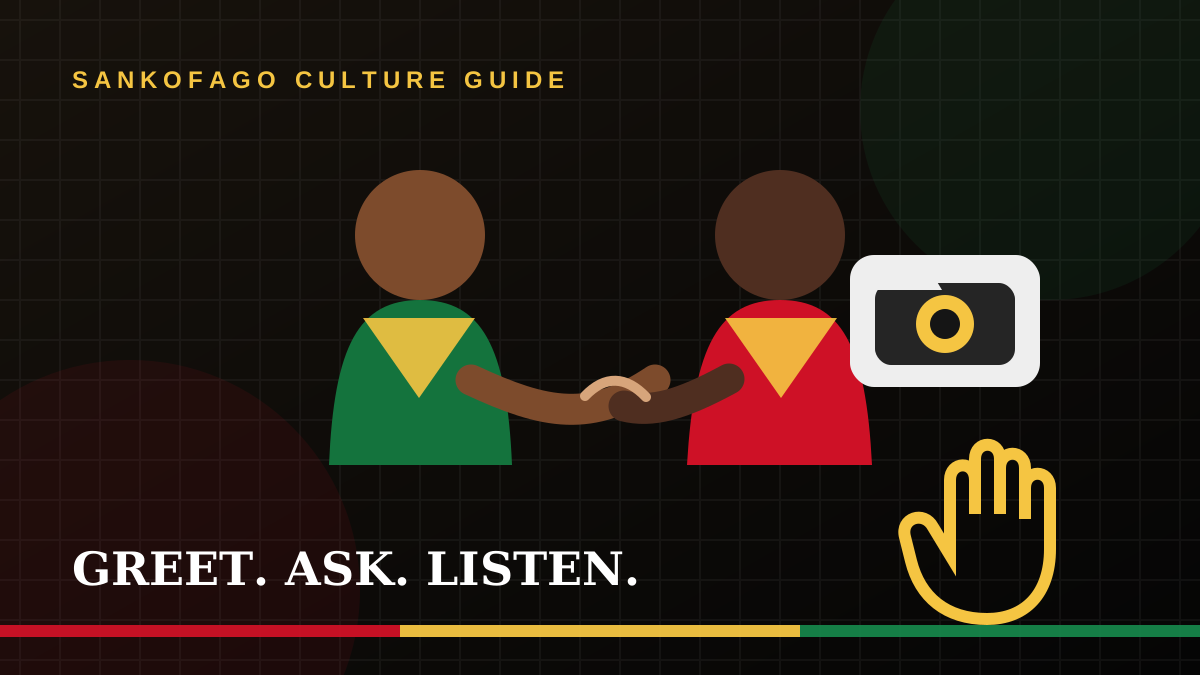
The short answer: six courtesies that travel well in Ghana
Ghana is often described through akwaaba—“welcome” in Akan—but welcome is not permission to treat people, homes, markets, palaces, or ceremonies as scenery. The most useful visitor habit is to slow the interaction down. A greeting, a name, and a brief explanation of what you want create a very different exchange from pointing a camera or launching straight into a request.
These are practical starting points, not a test. Ghana’s Ministry of Tourism, Culture and Creative Arts describes a country with English as the official language and many indigenous languages, including Akan, Ga-Dangme, Ewe, and Hausa. Customs also shift with age, faith, occasion, family, and place. If your host, guide, elder, or site staff gives specific direction, that local guidance matters more than a generic travel article.
- Greet first, especially before asking directions, negotiating, entering a home, or beginning a formal visit.
- Use the right hand—or both hands—when offering, receiving, paying, eating by hand, or waving.
- Ask before making a recognizable person the subject of a photo or video.
- Dress for the setting; a beach, business meeting, church, mosque, funeral, palace, and nightclub have different expectations.
- Let the host or guide explain ceremony, seating, introductions, gifts, and when participation is appropriate.
- Treat prices, tips, and gifts as separate conversations; kindness does not make every interaction transactional.
Start with a greeting—and do not pretend Ghana has one language
Peace Corps Ghana’s Twi introduction says taking time to greet people is essential because it shows recognition and respect. In an Akan-speaking setting, you may hear maakye in the morning, maaha in the afternoon, and maadwo in the evening. Medaase means thank you. Learn from a speaker rather than trusting phonetic spelling alone: Twi is tonal, and Peace Corps notes that pronunciation and meaning depend on tone.
A few sincere words can open a door, but English is entirely appropriate when you do not know the local language. Ask “How do I greet here?” instead of assuming Twi everywhere. Akwaaba is Akan; Ghana Tourism Authority has publicly emphasized that Woezor in Ewe and Oobakɛ in Ga are also culturally significant greetings. That linguistic diversity is part of Ghana, not a complication to erase.
Titles and age can matter in formal or family settings. Use the name or title you are given, greet elders and hosts attentively, and allow introductions to unfold. If you miss a sequence or pronunciation, a warm correction is useful information—not a reason to withdraw from the conversation.
Use your right hand, while making room for disability and real life
Across many Ghanaian settings, the right hand is preferred for handshakes, waving, paying, giving and receiving objects, and eating food by hand. Peace Corps Ghana explains that use of the left hand alone may communicate disrespect, particularly in southern Ghanaian cultures. When practical, use your right hand or support it with the left for a two-handed gesture.
This is a courtesy, not a reason to shame anyone. A traveler with an injury, limb difference, mobility limitation, or another access need can explain briefly or use the hand that works. Respect is communicated through the whole interaction. Likewise, do not force a handshake when someone offers another greeting; follow the other person’s cue.
Dress for the invitation, not for a stereotype
Contemporary Ghanaian style ranges from relaxed to sharply tailored and changes by venue. Comfortable, breathable clothes work for ordinary touring, while religious services, funerals, naming ceremonies, family introductions, palace visits, and official meetings may call for more coverage, particular colors, or a more formal look. Ask the person who invited you what guests normally wear and whether the occasion has a stated dress code.
Traditional textiles are living cultural expressions, not generic costume. Buying from Ghanaian makers and asking about a cloth’s origin, pattern, and appropriate use is a more respectful approach than assigning meaning from social media. If special attire is expected, a local host or maker can help you wear it correctly without turning the occasion into a performance.
Planning a ceremony, homecoming, market visit, or multi-region route? Share the actual occasions on your trip through /plan. SankofaGo can shape the itinerary, local guidance, transport, stays, and experiences around the settings you will enter—not just a list of attractions.
Ask before taking photos—and ask again before posting
A public place is still full of people with dignity and agency. Ask before making a trader, child, craftsperson, worshipper, performer, elder, or identifiable bystander the subject of your image. A visible gesture toward the camera followed by a clear yes is better than assuming silence means consent. For children, seek permission from a responsible adult as well as the child’s willing participation.
Shrines, palaces, funerals, religious services, memorial spaces, museums, airports, security facilities, and performances may have specific restrictions or fees. Ask the guide, host, or staff before the camera comes out. Consent to take a photograph is not automatically consent to publish it, use it in marketing, geotag a private location, or monetize it online; explain your intended use when that matters.
Photography etiquette is especially important at Cape Coast and Elmina castles, where visitors encounter sites connected to enslavement, loss, resistance, and return. Follow site instructions, keep posed content proportionate to the setting, and never treat another visitor’s grief as content.
Handle markets, meals, gifts, and tipping without awkwardness
At a market, greet the seller before asking a price. Bargaining may be normal in some informal markets, but it is not universal: posted-price shops, restaurants, supermarkets, and many formal businesses are not bargaining spaces. Negotiate with good humor, decide what the item is worth to you, and walk away politely if you cannot agree. Do not turn a small difference into a contest you need to win.
If food is shared by hand, wash first and use the right hand unless your host directs otherwise. Wait for a cue at a family table or ceremonial meal. Dietary needs are easiest to manage when stated early and plainly; accepting hospitality does not require eating something unsafe for you, and declining respectfully is better than pretending.
Ghana does not have one official visitor tipping percentage. The tourism ministry’s traveler information suggests carrying cedis for tips and gratuities, which confirms that tipping exists without creating a universal rate. Check whether a service charge is included, ask your planner or host what is customary for that specific hotel, guide, driver, restaurant, or activity, and tip in Ghana cedis when you choose. Pay agreed prices and wages first; a tip should recognize service, not replace fair payment.
Gifts are also contextual. For a home or family visit, ask your host what would be genuinely useful and present it without creating an obligation. Avoid distributing sweets, cash, or objects to children in public; support an established local organization when you want your giving to have a responsible structure.
Let local context lead at palaces, festivals, and homecomings
A traditional authority is not a tourist prop, and a festival is not staged solely for visitors. Palace and community protocols can govern who speaks, where guests sit, how chiefs and queen mothers are addressed, whether shoes or hats are removed, what may be photographed, and how gifts or drinks are presented. Arrange a knowledgeable introduction and follow the linguist, host, guide, or protocol officer rather than improvising.
Homecoming travel can carry deep emotion and different expectations within the same group. Some travelers feel immediate belonging; others feel distance, grief, joy, or all of these at once. Ghanaian hosts are individuals, not representatives assigned to validate a visitor’s identity. Approach heritage conversations with openness, listen to how people describe their own community, and leave room for connection to grow without demanding it.
The graceful fallback is simple: greet, ask, listen, and adjust. Start at /plan with your dates, regions, family connections, ceremonies, access needs, and cultural interests. SankofaGo can build and book a Ghana journey with the right local context, helping you arrive prepared without scripting every human moment.
Frequently asked questions
What is considered polite in Ghana?
Greeting before making a request, using the right hand to give or receive items, asking before photographing people, and following a host’s guidance are widely useful courtesies. Customs vary by region, language, faith, family, and occasion, so ask respectfully when unsure.
Is it rude to use your left hand in Ghana?
Using the left hand alone to wave, give, receive, pay, or eat may be understood as disrespectful in many settings. Use the right hand or both hands when practical. Disability, injury, and access needs matter; a brief explanation and considerate manner communicate respect.
Can tourists take photos of people in Ghana?
Ask before making an identifiable person the subject of a photo or video, and clarify before publishing or commercial use. Sacred places, palaces, museums, ceremonies, memorial sites, airports, and security-sensitive locations may impose additional rules, so check with staff or a local guide.
How much should I tip in Ghana?
There is no single official percentage for every service. Check for an included service charge, ask what is customary for the specific venue or service, and give an amount in Ghana cedis that reflects the service and context. A tip is separate from the agreed price.
What should I wear in Ghana?
Breathable everyday clothing suits much ordinary touring. Bring a more covered or polished option, and ask your host about requirements for religious services, funerals, ceremonies, family introductions, palace visits, and formal meetings.
Do I need to speak Twi to visit Ghana?
No. English is Ghana’s official language. Learning a local greeting is appreciated, but Twi is one of many Ghanaian languages; ask which language is appropriate where you are and learn pronunciation from a speaker.
Sources & further reading
- Ghana Ministry of Tourism, Culture and Creative Arts — Culture and languages
- Ghana Ministry of Tourism, Culture and Creative Arts — Tourist information, photography, and gratuities
- Ghana Tourism Authority — Ghana Guru visitor training guide
- Ghana Tourism Authority — Clarification on Akwaaba, Woezor, and Oobakɛ
- Peace Corps Ghana — Introduction to the Akan Twi language and cultural greetings
Ready to see it for yourself?
Plan your Ghana trip free with Nana, our AI planner — then our team books every car, hotel, and guide. You just confirm, pay, and go.
Start planning — it's free