
Getting Around Ghana: Flights, Drivers, Taxis, Buses & Tro-Tros
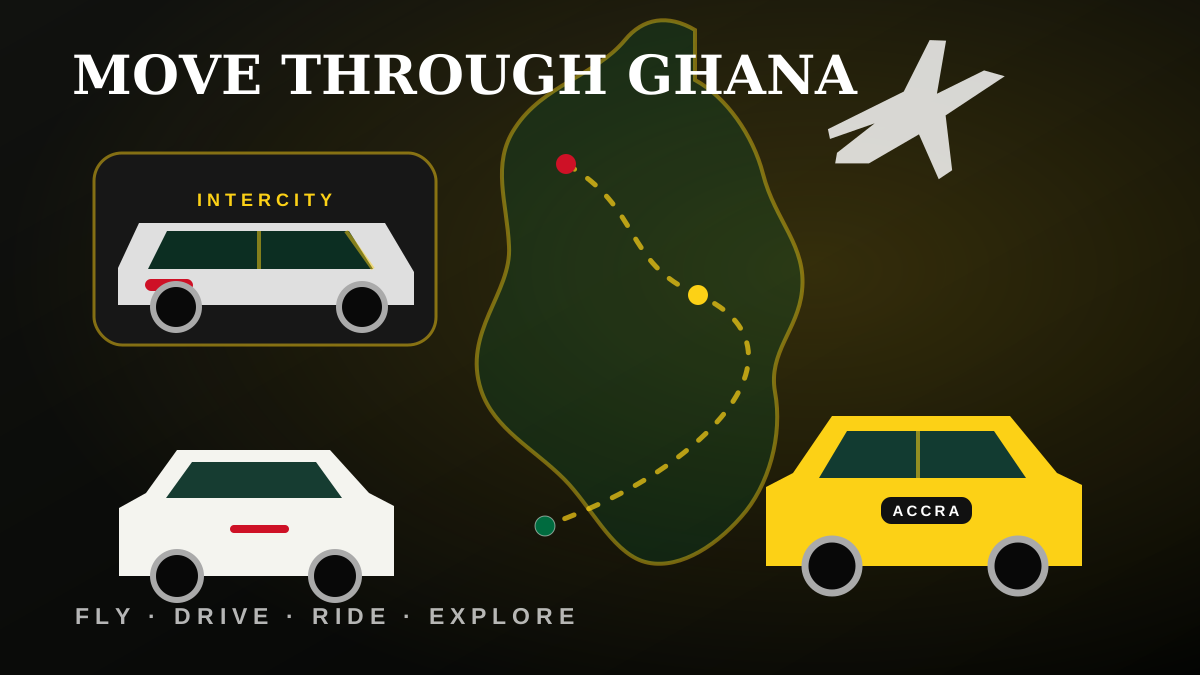
The easiest way to get around Ghana is to mix transport modes: use ride-hailing or trusted taxis for straightforward city trips, a vetted private driver for multi-stop touring, an intercity coach for a direct budget journey, and a domestic flight when a long road transfer would consume too much of your itinerary. Tro-tros are inexpensive and culturally familiar, but their routes, stops, luggage space, and departure style can be difficult for a first-time visitor. Choose by distance, comfort, schedule, and how much local navigation you want to manage—not by one “best” option for the whole country.
The short answer: match the transport to the journey
In Accra and other major cities, app-based rides can simplify pickup and fare confirmation where service is available, while registered taxis remain useful when you agree on the fare before departure. For a heritage circuit through Accra, Cape Coast, Elmina, and Kumasi, a private car with a professional driver usually offers the most coherent experience because the same vehicle can handle luggage, hotel transfers, and stops that do not sit beside a bus terminal.
For a single city-to-city journey, a scheduled coach can be a sensible lower-cost choice. For northern Ghana, flying can preserve days for Mole National Park, Tamale, or family time instead of turning the route into consecutive long drives. Ghana Civil Aviation Authority currently lists airports at Accra, Kumasi, Takoradi, Sunyani, Tamale, Wa, Navrongo, and Yendi, but a listed airport does not guarantee a scheduled passenger flight on your dates. Confirm the operating airline, airport, baggage allowance, and live timetable before building the itinerary around it.
- Short city trip: ride-hailing or a trusted registered taxi.
- Full sightseeing day: vetted private driver, ideally coordinated with your guide.
- Direct intercity journey: scheduled coach from an established operator.
- Long north–south journey: compare a domestic flight with the total road time.
- Local adventure: tro-tro only if you are comfortable with flexible routing and departure times.
Private driver: best for flexible multi-stop Ghana itineraries
A private driver is usually the strongest fit for travelers carrying luggage, families, small groups, older relatives, photographers, or anyone combining several regions. You control pickup times, can pause for meals and rest, and avoid arranging a new vehicle after every attraction. The value is not only comfort: a well-planned vehicle day connects places that public transport serves indirectly and protects the itinerary when a visit runs longer than expected.
Before paying, confirm what the quote includes: vehicle and driver, fuel, tolls, parking, driver accommodation or meals on overnight routes, airport waiting time, and the policy for extra hours or route changes. Ask for the vehicle type and passenger capacity, working seat belts for every traveler, air-conditioning expectations, and a realistic luggage plan. Do not accept pressure to overload a vehicle or continue with a driver who is speeding, distracted, or visibly tired.
This is where SankofaGo can remove the most friction. Use the free planner at /plan to share your dates, group size, regions, mobility needs, and luggage. Our team can turn the route into coordinated vehicle days, stays, and guides so you can evaluate the whole journey rather than stitching together isolated transfers.
Ride-hailing and taxis: practical for city travel
App-based rides can be convenient because the app records the requested pickup, driver, vehicle, destination, and an estimated or displayed fare. Availability, surge pricing, payment methods, and coverage can change by city and time, so install more than one locally operating option only after checking current app-store listings and terms. Match the number plate, vehicle, and driver shown in the app before entering, and do not accept an unrecorded substitute ride from someone claiming to be your driver.
With a street or hotel taxi, ask whether the vehicle is registered for the service and agree on the total fare and currency before the car moves. Show the destination on a map or provide a recognizable landmark because similar place names and informal addressing can cause confusion. Keep small cedi notes for an agreed cash fare and avoid displaying your full wallet.
For airport arrival, pre-arranged pickup is worth considering when you are landing late, traveling with children, carrying several bags, or continuing beyond Accra. Your arrival driver should have a confirmed name, phone number, meeting point, vehicle details, and a backup contact before your flight departs.
Intercity coaches: good for direct routes and independent travelers
A scheduled intercity coach works best when your journey begins and ends near the operator’s terminals and you do not need sightseeing stops en route. Intercity STC says its domestic network serves regional capitals and prominent cities, alongside international routes in West Africa. Other operators may serve additional corridors, but routes, terminals, classes, and booking systems change; verify them directly rather than trusting an old blog timetable.
Buy through the operator’s official channel or terminal, confirm which station you need, and arrive with time to identify the correct coach and load luggage. Keep passports, money, medication, electronics, and essential documents in your personal bag rather than the luggage hold. Ask about baggage rules, rest stops, expected arrival window, and what happens if the service is delayed or rescheduled.
Ghana’s National Road Safety Authority began registering road transport service providers as part of its regulatory mandate. Choosing an established provider with a formal terminal, manifest or ticket, and traceable customer support gives you more accountability than boarding an unidentified vehicle because it is leaving sooner.
Tro-tros: affordable, social, and less predictable
A tro-tro is a shared minibus or van operating along a local or intercity route. It is part of everyday mobility in Ghana and often the least expensive way to cover a route. Vehicles commonly leave from designated stations or roadside stops and may depart when enough passengers have boarded rather than on a visitor-friendly fixed schedule. A conductor—often called a mate—collects fares and calls the route or stops.
Tro-tros can be rewarding for confident independent travelers, but they are not the easiest choice with large luggage, tight connections, accessibility needs, or uncertainty about where to alight. Ask your accommodation or a trusted local contact which station, route name, landmark, and approximate current fare to use. Confirm the destination with the mate before boarding, keep valuables attached to you, and avoid making a first unfamiliar transfer after dark.
There is no need to treat public transport as a test of “authentic” travel. Respectful cultural engagement does not require choosing the least comfortable option. Use a tro-tro because it suits the journey and your confidence—not because you feel obliged to prove something.
Domestic flights: save time on long regional journeys
Domestic flights are most valuable when they replace a very long road day, particularly between Accra and northern Ghana. They can also connect Accra with other regional airports when schedules align. Ghana Civil Aviation Authority regulates civil aviation and publishes the country’s airport list and domestic passenger statistics; its 2025 data recorded more than 900,000 domestic passenger movements to or from Accra, with Kumasi and Tamale the largest routes in that table.
Book only with an operator authorized for commercial air transport, and confirm the actual airport names: Ghana’s current official list names Accra International Airport, Prempeh I International Airport in Kumasi, and Yakubu Tali International Airport in Tamale. Recheck the flight close to departure, allow time for check-in and security, and read baggage limits carefully—small-aircraft allowances may not match your international ticket.
A flight does not eliminate ground planning. You still need transport from the destination airport to a hotel, park, family home, or attraction. Compare door-to-door time and cost, not flight time alone, and keep a buffer before an international departure rather than relying on a tight same-day domestic connection.
Should a visitor rent a car and self-drive in Ghana?
Self-driving offers independence, but it carries more administrative and practical work than hiring a driver. Ghana drives on the right. Urban traffic, unfamiliar junctions, pedestrians, motorcycles, changing road surfaces, limited lighting on some roads, and navigation outside formal street addresses can make the learning curve steep. A rental company’s willingness to hand over a vehicle is not the same as confirming that your licence, insurance, and intended use meet every requirement.
Before reserving, ask the rental company and your insurer—in writing—which licence or permit is accepted for your nationality and length of stay, what the insurance excludes, the excess or deposit, permitted regions and roads, breakdown support, and whether another named person may drive. Inspect the tyres, spare, lights, brakes, seat belts, air-conditioning, fuel level, and existing damage with photos before departure. Ghana’s DVLA is the authoritative source for vehicle roadworthiness and driver-licensing services; long-term foreign residents should note that its foreign-licence conversion process has residency and identification requirements.
If your holiday is short or your route includes several regions, a driver often buys back more time and attention than self-driving saves. You can still keep flexibility by agreeing on the day’s route and stops together.
A practical transport safety checklist
The NRSA is Ghana’s lead road-safety agency and regulates road transport services. Its guidance emphasizes speed control, sober driving, rest on long journeys, vehicle roadworthiness, and seat-belt use. Travelers can support safer decisions by speaking up early and refusing a ride that feels unsafe.
- Use a seat belt whenever one is provided; request a suitable child restraint before travel if your family needs one.
- Avoid encouraging a driver to speed to recover a late start or missed stop.
- Build rest and daylight into long road days; do not normalize a visibly fatigued driver continuing.
- Share the vehicle or ride details and expected arrival with someone you trust.
- Keep your phone charged, save offline maps, and carry a backup payment method.
- For an immediate emergency in Ghana, use the official emergency number 112; NRSA also publishes 194 for reporting road-safety problems.
Build transport into the itinerary—not after it
The transport decision shapes how much Ghana you actually experience. A cheap connection that requires two terminals, uncertain departure, and a late arrival may cost more in lost time than it saves. A private vehicle on every day may be unnecessary when a short flight and two local transfers solve the route cleanly. Plan each leg alongside the activity, luggage, check-in time, and energy it demands.
Start your route at /plan and tell SankofaGo where you want to go, who is traveling, and how independent or supported you want the journey to feel. We will help connect the itinerary with appropriate cars, drivers, guides, stays, and regional transfers—so getting around Ghana becomes part of a thoughtful trip, not a daily negotiation.
Frequently asked questions
What is the best way for tourists to get around Ghana?
Most tourists are best served by a mix: ride-hailing or trusted taxis for simple city trips, a vetted private driver for multi-stop touring, coaches for direct intercity travel, and domestic flights for selected long-distance routes.
Do ride-hailing apps work in Ghana?
App-based rides operate in parts of Ghana, especially major cities, but specific apps, coverage, fares, and payment methods can change. Check current local availability, verify the number plate and driver in the app, and keep a trusted taxi or pickup option as backup.
Are tro-tros safe for tourists?
Tro-tros are widely used shared minibuses, but vehicle condition, comfort, route clarity, and operating practices vary. Choose a recognized station and route, keep valuables with you, use an available seat belt, and select a coach or vetted driver if you have luggage, accessibility needs, tight timing, or safety concerns.
Can you fly within Ghana?
Yes. Scheduled domestic service can connect Accra with regional airports, subject to current airline routes and timetables. Confirm the operating carrier, airport, baggage allowance, and schedule directly before booking ground arrangements around the flight.
Is it better to rent a car or hire a driver in Ghana?
For a short first trip or a multi-region itinerary, hiring a vetted driver is usually easier and lets you focus on the journey. Self-driving may suit experienced visitors who have confirmed licence, insurance, rental, navigation, and road-condition requirements in advance.
How do I arrange transport between Accra and Cape Coast?
Choose a private driver if you want hotel pickup, luggage handling, and sightseeing flexibility; choose a scheduled intercity coach if you want a direct lower-cost trip between terminals. Confirm the live pickup point, departure, baggage rules, and onward transfer before travel.
Sources & further reading
- Ghana Civil Aviation Authority — Airports in Ghana
- Ghana Civil Aviation Authority — Domestic passenger statistics, 2010–2025
- Ghana Civil Aviation Authority — Airline certification
- National Road Safety Authority — Mandate and road-safety guidance
- National Road Safety Authority — Registration of road transport service providers
- National Road Safety Authority — Pre-departure passenger-vehicle inspections
- Driver and Vehicle Licensing Authority — Driver and vehicle services
- Ministry of Transport — Road transport services
- Ministry of the Interior — Ghana emergency numbers
- Intercity STC Coaches — Domestic and international bus services
- Ghana Tourism Authority — Getting around Ghana
Ready to see it for yourself?
Plan your Ghana trip free with Nana, our AI planner — then our team books every car, hotel, and guide. You just confirm, pay, and go.
Start planning — it's free