
Kejetia Market Kumasi Guide: Shopping, Crowds & Route Tips
The short answer: Kejetia Market, also called Kumasi Central Market, is worth visiting if you want to feel Kumasi as a living trading city, not just tick off a shopping stop. Visit Ghana describes Kejetia as the largest open-air market in West Africa, and official 2026 updates show the wider Kejetia redevelopment remains active, with Phase II contractors scheduled to return in October 2026. Go with a local guide or trusted driver, small Ghana cedi notes, a focused shopping list, patient haggling, modest valuables, and enough time to pair the market with Manhyia, Adum, kente villages, or a softer Kumasi day.
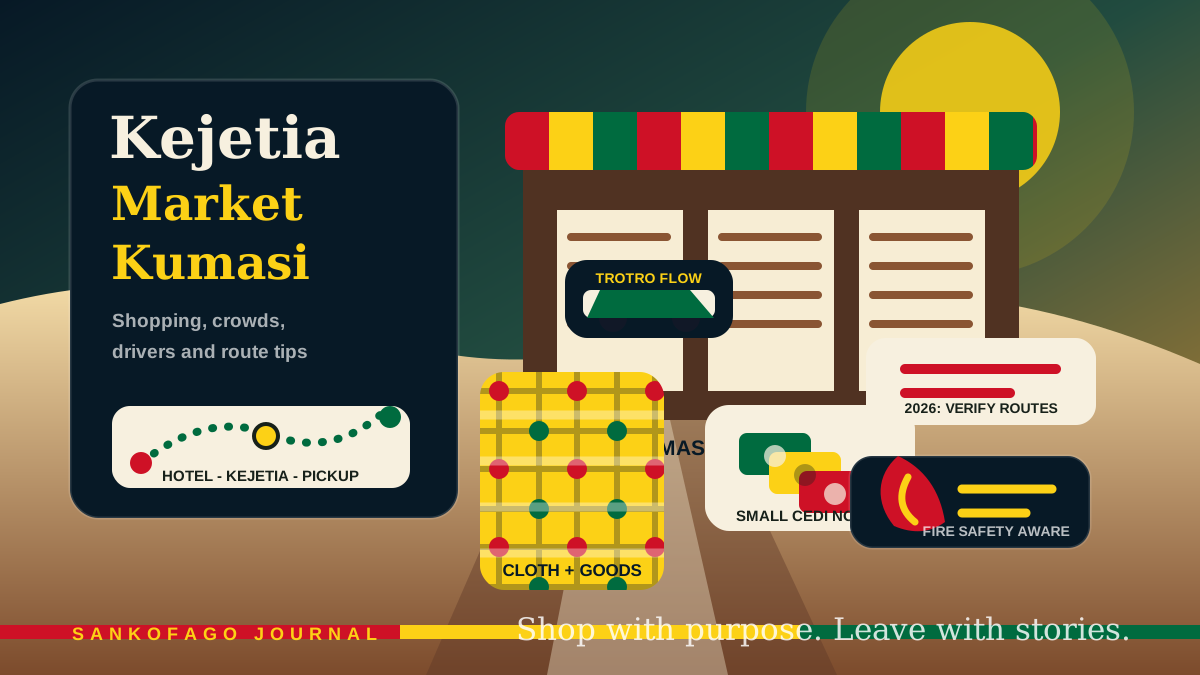
The quick answer: Kejetia is a Kumasi experience, not a mall stop
This guide is different from SankofaGo's Makola Market Accra guide, Accra Arts Centre souvenir guide, Bonwire and Adanwomase kente guide, tailoring guide, souvenir shipping guide, and Kumasi 2-3 day itinerary. Those posts help with Accra shopping, craft markets, weaving villages, custom clothing, shipping, and broad Kumasi planning. This post answers a narrower search intent: how should a traveler visit Kejetia Market in Kumasi without getting overwhelmed?
The answer is to treat Kejetia as a working market first and a visitor experience second. It is busy because people are buying, selling, loading, cooking, commuting, repairing, bargaining, and moving through the heart of Kumasi. The best visit has a purpose, a meeting point, a respectful pace, and a plan for getting out before fatigue turns wonder into stress.
- Best fit: first-time Kumasi visitors, diaspora travelers, shoppers, photographers who ask first, food-curious travelers, culture lovers, and people pairing Manhyia Palace Museum with everyday city life.
- Plan around: crowds, heat, traffic, pickpocket risk, uneven walking, trusted navigation, small cash, bargaining rhythm, market sections, and construction or redevelopment changes.
- Do not assume: every lane is easy to find again, a card machine will work, prices are fixed, every trader wants photos, or Kejetia feels like Accra Arts Centre or a modern shopping mall.
- Search intent match: this is a Kejetia Market Kumasi visitor guide, not a general Kumasi itinerary or a wholesale-trading manual.
What Kejetia is, and why it matters
Kejetia sits in Kumasi, the Ashanti Region capital and Ghana's second city. Visit Ghana frames Kumasi as the ancient capital of the Asante area, founded in 1695 by Asantehene Osei Tutu, and places Kejetia inside a wider Ashanti story of gold, cocoa, cloth production, palace history, festivals, and artisan villages.
Visit Ghana also says the Ashanti Region has the largest open-air market in West Africa at Kejetia, where haggling is an accepted part of trading in Ghana. Older Kumasi Metropolitan Assembly planning material describes Kumasi Central Market as the largest single open-air market in Ghana and a commercial nerve for the nation and beyond.
For travelers, that scale matters. Kejetia is not only a place to buy fabric, sandals, spices, household goods, beads, second-hand clothing, luggage, beauty supplies, snacks, or phone accessories. It is also a place to understand Kumasi's role as a commercial bridge between southern Ghana, northern Ghana, and nearby trading networks.
What to buy, and what to skip
Kejetia is strongest when you want everyday Ghana: fabric, headwraps, sandals, bags, kitchen items, toiletries, second-hand clothing, school supplies, phone accessories, food ingredients, spices, and small household goods. If you are building a family-visit kit, replacing something forgotten, or shopping for practical gifts, the market can be useful.
If you want finished art objects, carved souvenirs, labelled craft stories, or an easier visitor-facing environment, Accra Arts Centre, selected Kumasi craft shops, or weaving villages may be calmer. If you want kente education, Bonwire or Adanwomase gives you the loom story that Kejetia may not have time to explain.
A simple rule helps: use Kejetia for daily-life shopping and atmosphere, use craft villages for maker context, use tailors for custom fit, and use shipping or customs planning before buying bulky goods you cannot carry home.
How to move through the market without losing the day
Start with one clear goal. For example: buy cloth and headwraps, compare sandals, see food sections, replace travel essentials, or experience the market for one hour before lunch. A vague plan like "let us see everything" rarely works in a market this large.
Agree on a meeting point before entering, keep your driver or guide reachable, and avoid splitting the group unless everyone has a working phone, local data, and a clear exit plan. Keep cash divided, hold your phone securely, and carry purchases in a simple bag rather than advertising every new item.
Mid-article planning note: start at /plan and ask Nana for a "Kejetia Market Kumasi stop." Share your hotel area, group size, mobility needs, shopping goals, whether you want photos, whether Manhyia or Adum is also on the day, and whether you need a guide who can help translate, negotiate gently, and keep the route efficient.
Bargaining, language, and trader respect
Bargaining is normal in many Ghanaian market settings, but it should still feel human. Smile, greet first, ask the price, counter politely, and walk away warmly if the price does not fit. Do not mock a price, shame a trader, or turn negotiation into theater for your travel group.
A few Twi greetings help, especially in Kumasi: "maakye" for good morning, "maaha" for good afternoon, "medaase" for thank you, and "sen?" or "ete sen?" when asking how someone is. English is widely used in traveler-facing moments, but greeting in the local rhythm can soften the exchange.
Ask before photographing traders, children, food preparation, cash handling, or shop interiors. Some people will say yes, some will ask for a purchase first, and some will prefer no camera. All three answers are valid.
Current redevelopment and safety context
Kejetia is also an infrastructure story. Ghana's Information Services Department reported on September 22, 2026 that the Ministry of Local Government, Chieftaincy and Religious Affairs, working with the Kumasi Metropolitan Assembly, held a stakeholder engagement to resume and complete the Kumasi Kejetia Redevelopment Project Phase II. The same official report said contractors were scheduled to return to the site in October 2026 and that the four-level structure would accommodate 10,528 trading units alongside public services.
Ghana News Agency reported on August 31, 2026 that the minister inspected the stalled Kejetia Phase II and Krofrom Market projects, noting that delays had created congestion in Kumasi and pushed traders and hawkers onto streets and pavements in the business district. That is useful traveler context: sections, traffic patterns, vendor locations, and pedestrian flow may change while works resume.
Fire safety is another serious market issue in Ghana. Ghana National Fire Service says its mandate includes fire prevention, public education, inspections, rescue, and fire suppression, and GNA reported in March 2026 that the Ashanti Regional GNFS launched an inter-market fire safety quiz in Kumasi, with Kejetia part of the first zone. Travelers do not need to become fire experts, but they should respect blocked routes, avoid crowding emergency access, and follow instructions from market authorities or fire officers.
Transport, timing, and personal safety
Kejetia is central, busy, and connected to transport movement, which is exactly why arrival and pickup planning matter. The easiest traveler version is usually a trusted driver, clear drop-off point, short market window, and pre-agreed pickup point away from the most chaotic foot traffic.
The U.S. Department of State Ghana advisory dated July 7, 2026 rates Ghana at Level 2, Exercise Increased Caution, due to crime, poor health infrastructure, violence against women, and violence against lesbian and gay travelers. Its Ghana country information also says petty theft is a serious problem and advises travelers not to display signs of wealth, to stay alert in tourist spots, and to use caution at night.
GOV.UK similarly warns that street crime such as pickpocketing and bag-snatching can happen in Ghana and advises keeping valuables secure and avoiding carrying large sums of money. In Kejetia, translate that into ordinary choices: no flashy watches, no back-pocket phone, no loose passport, no big camera swing in tight lanes, and no late, tired wandering after dark.
How to pair Kejetia with the rest of Kumasi
Kejetia can be a vivid counterpoint to Manhyia Palace Museum, the National Cultural Centre, Adum, Kumasi Fort, Lake Bosomtwe, or a kente village day. But do not stack too many high-sensory stops together. A palace visit asks for cultural attention; Kejetia asks for street awareness; a kente village asks for craft patience.
For first-time visitors, a balanced day might be Manhyia in the morning, lunch, then a guided Kejetia window for one or two shopping goals. Another option is Kejetia first, then a quieter afternoon at the National Cultural Centre or a hotel reset before dinner. If you are traveling with elders, children, mobility needs, or shoppers who love to linger, slow the day down.
When you are ready, compare support levels at /pricing, then use /plan with "Kejetia Market" in your notes. Tell Nana whether you want a quick culture stop, a fabric-shopping run, a Kumasi everyday-life walk, a diaspora family shopping day, or a broader Asante itinerary that keeps the market useful instead of overwhelming.
Frequently asked questions
Is Kejetia Market worth visiting in Kumasi?
Yes, if you want a real Kumasi trading experience and can handle crowds. Kejetia is best with a guide or trusted driver, a focused shopping goal, small cash, secure valuables, and enough time to leave before you are exhausted.
What is Kejetia Market also called?
Kejetia Market is commonly connected with Kumasi Central Market in Kumasi, Ashanti Region. Visit Ghana describes Kejetia as the largest open-air market in West Africa.
What can tourists buy at Kejetia Market?
Travelers commonly look for fabric, headwraps, sandals, bags, food ingredients, spices, second-hand clothing, phone accessories, toiletries, luggage, and practical family-visit items. For finished craft stories, a craft market or weaving village may be easier.
Do I need a guide for Kejetia Market?
A guide is strongly recommended for first-time visitors, especially if you want specific sections, translation help, gentle bargaining support, photography etiquette, or a clean pickup plan after shopping.
Is bargaining acceptable at Kejetia?
Yes, bargaining is part of many Ghanaian market settings, but it should be polite. Greet first, ask the price, counter respectfully, and walk away kindly if you cannot agree.
Is Kejetia Market safe for travelers?
Many travelers visit without incident, but it is crowded and requires awareness. Keep valuables secure, avoid displaying wealth, carry small cash, protect your phone, and use a trusted pickup plan. Current travel advisories warn about petty theft and crime in Ghana generally.
Can SankofaGo include Kejetia in a Kumasi itinerary?
Yes. SankofaGo can build Kejetia into a Kumasi day with Manhyia, Adum, kente villages, Lake Bosomtwe, or a softer shopping-focused route, including driver timing and practical pacing.
Sources & further reading
- Ghana Tourism Authority / Visit Ghana - Ashanti Region
- Information Services Department - Kejetia Redevelopment Phase II stakeholder engagement
- Ghana News Agency - Minister inspects Kejetia Phase II and Krofrom Market projects
- Ghana National Fire Service - official mandate and services
- Ghana News Agency - Ashanti Regional GNFS inter-market fire safety quiz
- U.S. Department of State - Ghana Travel Advisory
- GOV.UK - Ghana safety and security travel advice
- National Development Planning Commission - Kumasi Metropolitan Assembly MTDP 2018-2021
Ready to see it for yourself?
Plan your Ghana trip free with Nana, our AI planner — then our team books every car, hotel, and guide. You just confirm, pay, and go.
Start planning — it's free