
Money in Ghana: Cash, Cards, ATMs & Mobile Money for Travelers
The best way to pay in Ghana is to use Ghana cedis and carry more than one payment option. Keep a modest amount of cash for markets, tips, small shops, and places where a card terminal or network may be unavailable; use a no-foreign-transaction-fee card where it is accepted; and keep a second card separately as backup. Exchange foreign cash only at a licensed bank or foreign-exchange bureau, decline unofficial street offers, and never depend on mobile money until your own registered Ghana number and wallet are fully working.
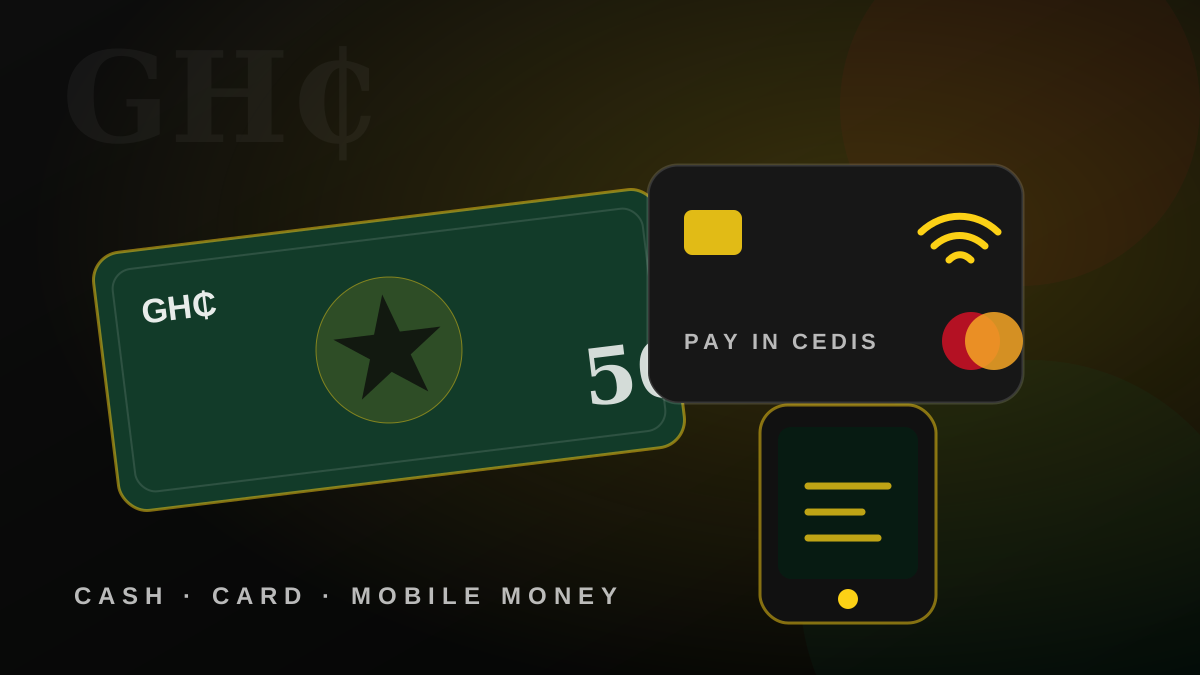
The short answer: bring a card, get cedis, and keep a backup
Ghana is not cash-only, but a card-only trip creates unnecessary friction. Hotels, larger restaurants, supermarkets, and established tourism businesses may accept cards, while cash remains useful for smaller purchases and informal settings. Acceptance can vary by merchant, terminal, network, and location, so ask before ordering or committing to a service.
A resilient travel setup has three layers: cedi cash for ordinary spending, a primary card for larger or traceable payments, and a second card stored separately. Tell your bank you are traveling if it still requests travel notices, confirm your international ATM and purchase settings, and save the bank’s support number somewhere other than the card itself.
- Before departure: confirm international use, daily limits, and foreign-transaction fees with your bank.
- On arrival: obtain enough cedis for your first day without carrying the entire trip budget in cash.
- During the trip: replenish at secure ATMs or licensed exchange providers as needed.
- For backup: separate your cards and keep a small emergency cash reserve from your daily wallet.
Ghana uses the cedi—not US dollars or pounds for everyday payment
The Ghana cedi is Ghana’s sole legal tender; one cedi is divided into 100 pesewas. Bank of Ghana identifies current notes in denominations of GH₵1, GH₵2, GH₵5, GH₵10, GH₵20, GH₵50, GH₵100, and GH₵200, alongside coins. The notes feature the Big Six leaders of Ghana’s independence movement on the front, an important detail that also helps travelers recognize the currency.
Do not plan to pay ordinary local bills in US dollars, British pounds, or euros. On July 1, 2026, Bank of Ghana again reminded the public that pricing and receiving payment for goods and services in foreign currency is prohibited under the Foreign Exchange Act, subject to authorized exceptions. Even when a traveler is shown a foreign-currency reference, ask what will actually be charged in cedis and check the conversion before agreeing.
There is no responsible fixed exchange-rate promise for a future trip. Rates move. Compare the provider’s live buy or sell rate, any commission, and the final cedi amount at the time of the transaction rather than planning around an old screenshot or social-media post.
Where to exchange money safely in Ghana
Use a licensed bank or foreign-exchange bureau. Bank of Ghana prohibits unauthorized foreign-exchange dealing, commonly called the black market. A stranger offering a slightly better street rate is not a harmless shortcut: you lose the protections, records, and accountability of a regulated transaction.
At a forex bureau, inspect the posted rate, ask whether there is a fee, count the cedis before leaving the counter, and insist on the official transaction receipt. Bank of Ghana’s bureau rules require official foreign-exchange encashment or sale receipts and recognized identification for relevant transactions, so carry your passport or another accepted ID. Keep the receipt, especially if you may later need to explain or reverse an exchange.
Bring clean, current foreign notes if you intend to exchange cash, because providers may decline damaged or hard-to-verify notes. Do not hand over money until the rate and final amount are clear. SankofaGo travelers can add arrival pickup and first-day logistics through the free planner at /plan, reducing the need to solve transport, connectivity, and cash all at once after a long flight.
Using ATMs and cards without avoidable surprises
Choose an ATM attached to or inside a staffed bank, airport, hotel, or established commercial location where possible. Shield the keypad, inspect the card slot, put cash away before stepping aside, and take the receipt only if you can store or destroy it securely. If a machine retains your card, contact the bank that operates the ATM and your card issuer immediately rather than accepting help from a bystander.
Your total cost can include an ATM operator fee, your own bank’s withdrawal fee, and currency conversion. Read every prompt before confirming. If a machine or card terminal offers to convert the charge into your home currency, compare carefully: paying in cedis generally lets your card network or issuer perform the conversion, while a displayed home-currency option uses the operator’s quoted conversion. Ask your issuer how it handles both before travel.
For card purchases, keep the card in sight, check the amount and currency on the terminal, and retain the receipt until the charge settles. Never let a merchant record your PIN. Network outages and declined international cards happen, so a declined transaction does not automatically mean your account lacks funds; use your planned backup rather than repeatedly trying in an uncertain setting.
Can tourists use mobile money in Ghana?
Mobile money is deeply embedded in Ghana’s payment system, but visitors should treat it as an optional convenience—not their only way to pay. A mobile-money wallet is tied to a registered phone number and provider process. The National Communications Authority’s current registration guidance says a new foreign subscriber must present a passport, ECOWAS card, or Non-Citizen Ghana Card to the mobile-network agent; for non-resident foreigners, validation is conducted through an approved database.
Ghana was preparing a new number-registration exercise in 2026. NCA said in March that the official start date would be announced later, while its published FAQ identifies a passport plus proof of entry for visitors and tourists. Because rollout details can change, buy service only from an authorized provider channel and follow the live identification requirements rather than an old online tutorial.
Protect the wallet like a bank account. Ghana’s Cyber Security Authority advises users never to share a mobile-money PIN, never to hand a phone to an agent to complete a transaction, and to wait for a genuine confirmation message before leaving. Verify the recipient name and amount yourself; a screenshot or message from an unfamiliar number is not proof that funds arrived.
How much cash should you carry each day?
There is no universal daily cash figure because accommodation, transport, meals, shopping, and prepaid tour arrangements differ. Carry enough cedis for the day’s small purchases and a realistic transport backup, not your full vacation budget. A coordinated trip may require less daily cash because major stays, private transport, and guided experiences are confirmed before travel.
Use a hotel safe or another secure arrangement for reserve cash and documents, split funds between trusted adults in a group, and count money discreetly. Before leaving a city for a rural area or a long road day, ask your guide or accommodation whether dependable ATMs and card acceptance are available along the route.
Travelers carrying substantial foreign currency should review Customs guidance before arrival. Ghana Revenue Authority says foreign currency above US$1,000 may be declared on the Bank of Ghana Currency Declaration Form. For a smoother plan from airport pickup through regional travel, build your Ghana itinerary at /plan and send it to SankofaGo for route, stay, transport, and experience coordination.
Frequently asked questions
Should I bring cash or a card to Ghana?
Bring both. Use Ghana cedi cash for small purchases and places without reliable card acceptance, a primary card for suitable larger payments, and a second card stored separately as backup.
Can I pay with US dollars in Ghana?
Plan to pay in Ghana cedis. Bank of Ghana states that the cedi is Ghana’s sole legal tender and that unauthorized pricing or payment for goods and services in foreign currency is prohibited, subject to authorized exceptions.
Where should I exchange money in Ghana?
Exchange money at a licensed bank or foreign-exchange bureau. Confirm the live rate and fees, bring accepted identification, count your cedis, and keep the official receipt. Avoid unauthorized street exchange.
Do credit and debit cards work in Ghana?
Cards may work at many hotels, larger restaurants, supermarkets, and established businesses, but acceptance and network reliability vary. Confirm before purchase and keep cedi cash plus a second payment method available.
Can a tourist get mobile money in Ghana?
Potentially, after obtaining and registering an eligible Ghana phone number and completing the provider’s wallet requirements. Current NCA guidance includes identity verification for foreign visitors, but rollout procedures can change, so use an authorized provider and verify the live requirements.
Should I choose cedis or my home currency at an ATM?
Review the offered rate and fees carefully. Choosing cedis generally leaves conversion to your card network or issuer; choosing a displayed home-currency amount accepts the ATM operator’s conversion. Confirm your issuer’s fees before traveling.
Sources & further reading
- Bank of Ghana — Prohibition of foreign-currency pricing and payment
- Bank of Ghana — Features of Ghana currency notes
- Bank of Ghana — Financial literacy on foreign-exchange bureaux
- Bank of Ghana — Unauthorized foreign-exchange transactions
- Ghana Revenue Authority — Passengers’ obligations at Customs
- Ghana Tourism Authority — Getting around Ghana and currency
- National Communications Authority — SIM registration process
- National Communications Authority — 2026 number-registration update
- Cyber Security Authority of Ghana — Mobile money fraud guidance
Ready to see it for yourself?
Plan your Ghana trip free with Nana, our AI planner — then our team books every car, hotel, and guide. You just confirm, pay, and go.
Start planning — it's free