
Ntonso Adinkra Cloth Village Guide: Symbols, Stamping & Route Tips
The short answer: Ntonso Adinkra Cloth Village is the Kumasi-area craft stop to choose when you want to understand adinkra as a living symbol language, not just buy patterned fabric. Visit Ghana describes Ntonso as the homeland of adinkra cloth, Ghana's biggest producer of adinkra, and a place with a visitor center and official guided tours where travelers can see dye preparation, cloth dyeing, stamping, and embroidery. Go with time to ask what symbols mean, cash for artisans, photo permission, and a route that pairs Ntonso with Manhyia, Kejetia, Bonwire, Adanwomase, or a calmer Kumasi day.
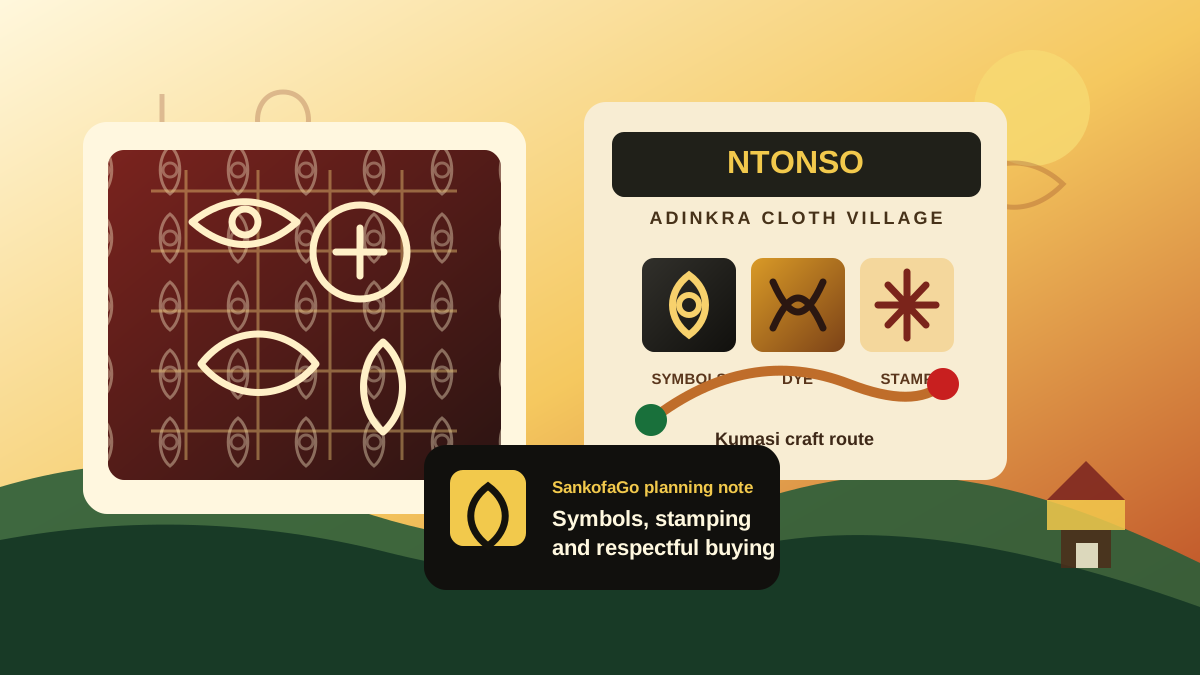
The quick answer: Ntonso is about meaning, not only shopping
This guide continues SankofaGo's Kumasi and Ashanti coverage, but it answers a different search intent from the Kejetia Market guide, Bonwire and Adanwomase kente guide, Manhyia Palace Museum guide, Asante Traditional Buildings guide, tailoring guide, and Kumasi 2-3 day itinerary. Kejetia is about navigating a huge working market. Bonwire and Adanwomase are about kente weaving. Ntonso is about adinkra symbols, stamped cloth, dye, proverbs, workshop learning, and buying directly from a craft community.
The best Ntonso visit is slow enough to let the symbols breathe. You are not only looking at motifs; you are meeting a visual vocabulary of values such as unity, hope, strength, wisdom, courage, and respect for authority. A guide or artisan can help you move from "that pattern is beautiful" to "this cloth is saying something."
- Best fit: culture-focused travelers, diaspora visitors, students, designers, shoppers who want meaning behind purchases, families, and anyone building a Kumasi craft day.
- Plan around: official guided tours, workshop timing, cash, symbol explanations, photo consent, heat, road time from Kumasi, and whether you also want Kejetia, Manhyia, Bonwire, or Adanwomase.
- Do not assume: every symbol means the same thing in every context, every artisan wants to be photographed, adinkra is only funeral cloth, or Ntonso is the same experience as a kente weaving village.
- Search intent match: this is a Ntonso Adinkra Cloth Village visitor guide, not a broad Kumasi itinerary or a general history of Akan symbolism.
What Visit Ghana says travelers can see at Ntonso
Ghana Tourism Authority's Visit Ghana page calls Ntonso the homeland of adinkra cloth and says it is the only place in Ghana where traditional adinkra is made locally from scratch. The same page says Ntonso remains Ghana's biggest producer of adinkra and has a new visitor center with official guided tours.
Visit Ghana also names the practical stages travelers may encounter on a walking tour: dye preparation, cloth dyeing, adinkra stamping, and embroidery of stamped cloth. That matters because a good visit is not only a retail stop. It is a chance to see how material, symbol, hand skill, and explanation come together.
Because workshop schedules, artisan availability, prices, and group handling can change, confirm the day before or the morning of travel. If you are coming with students, designers, a diaspora group, children, or anyone hoping to stamp cloth themselves, build the schedule around the workshop rather than squeezing it into leftover time.
What adinkra symbols are, in plain language
Adinkra symbols are Ghanaian visual signs associated especially with Akan and Asante cultural expression. Ghana's National Commission on Culture describes adinkra as a timeless language of philosophy, identity, and artistry, and says the symbols have moved beyond funerary cloths into fashion, jewellery, visual arts, crafts, furniture, home decor, architecture, design, and education.
The useful traveler explanation is this: adinkra symbols work like compact proverbs. A symbol can carry a lesson, value, warning, memory, social ideal, or spiritual idea. When you buy adinkra cloth without asking what the symbols mean, you may miss the most important part of the craft.
Ghana News Agency reported that Ntonso Art and Craft Village curator Paul Nyamaah described each symbol as conveying words of wisdom, including ideas of friendship, courage, hope, respect for authority, unity, strength, togetherness, and tenacity. GNA also reported that there are currently more than 600 different adinkra symbol designs in Ghana, each carrying a different story or message.
How adinkra cloth changed over time
Visit Ghana says adinkra cloth was originally worn only for funerals in the Ashanti Region and was produced mainly in black, brown, and red. The same official page notes that today it is made in all colors and used throughout Ghana.
That shift is important for visitors. Darker funeral associations still matter, but adinkra is not frozen in one use. You will see symbols on cloth, bags, wall art, jewellery, logos, public spaces, home decor, and fashion. The modern use does not erase the older solemn meanings; it adds layers.
A respectful buyer asks two simple questions: "What does this symbol mean?" and "When is this cloth appropriate to wear or gift?" Those questions help you avoid treating a wisdom system like a random print, and they often make the purchase more memorable.
How to structure a Ntonso visit from Kumasi
Ntonso is easiest to plan as a Kumasi craft-and-culture chapter, not as a rushed roadside errand. Leave room for traffic, introductions, demonstration time, shopping, questions, and a pause before the next stop. If your group is deeply interested in symbols, one hour can feel too short.
A balanced day might pair Manhyia Palace Museum in the morning with Ntonso in the afternoon, or Kejetia early with Ntonso after lunch when you want a more interpretive craft experience. A craft-heavy day could combine Ntonso with Bonwire or Adanwomase, but only if you accept that adinkra stamping and kente weaving deserve separate attention.
Mid-article planning note: start at /plan and ask Nana for a "Ntonso adinkra cloth route." Share your Kumasi hotel area, group size, date, whether you want a hands-on workshop, whether you are buying gifts or ceremony cloth, your photo needs, and whether Manhyia, Kejetia, Bonwire, Adanwomase, Lake Bosomtwe, or a quieter lunch should be included.
Buying adinkra cloth without losing the story
Bring cash in Ghana cedi, ask prices clearly, and remember that a handmade object includes time, knowledge, materials, rent, transport, family labor, and the cost of keeping a craft alive. Bargaining may happen, but it should not turn into a performance where the buyer tries to win and the artisan loses face.
If you are buying for a family elder, naming ceremony, memorial, graduation, wedding, home decor, church group, school project, or diaspora return gift, say so. The artisan or guide may steer you toward symbols and colors that fit the purpose better than the cloth you first noticed.
For international travel, think ahead about folding, staining, moisture, luggage space, and customs rules. If you are buying several pieces, ask how to care for the fabric and whether any dye transfer is possible before packing it against white clothing.
Photos, workshops, and respect for makers
Ask before photographing artisans, carved stamps, unfinished work, children, prices, private work areas, or another visitor's custom piece. A demonstration may be public, but that does not make every face, tool, and design automatically yours to film.
If you join a stamping or dyeing demonstration, follow the maker's rhythm. Do not grab tools, rush the explanation, or treat mistakes as comedy. Workshops are enjoyable precisely because they reveal how much skill sits behind a pattern that looks simple from a distance.
Designers and content creators should be especially careful. If you are collecting visual inspiration for commercial use, say so, ask permission, buy fairly, credit accurately, and avoid copying living craft knowledge without relationship or compensation.
Safety, money, and road timing
The U.S. Department of State Ghana advisory dated July 7, 2026 rates Ghana at Level 2, Exercise Increased Caution, and specifically points to crime, poor health infrastructure, violence against women, and violence against lesbian and gay travelers. It also advises travelers to stay aware, keep a low profile, avoid displaying signs of wealth, and stay alert in tourist spots.
GOV.UK advises daylight travel for longer trips outside major cities and warns that roads can be poor, street lighting may be weak or absent, and serious road accidents are more likely after dark. For Ntonso, the practical answer is simple: use a trusted driver, protect daylight margins, keep valuables discreet, and avoid ending a craft day with a tired night drive.
Carry water, sun protection, small cash, a charged phone, and any essential medication. If your group includes elders, children, mobility needs, or same-day flights, keep the Kumasi plan conservative rather than stacking every nearby attraction.
How SankofaGo can help
Ntonso is the kind of stop where SankofaGo can turn a nice craft visit into a meaningful route. We can help decide whether it belongs with Kejetia, Manhyia Palace Museum, Bonwire, Adanwomase, Lake Bosomtwe, the National Cultural Centre, or a softer Kumasi day with fewer transitions.
We can also help with driver timing, workshop checks, guide expectations, cash reminders, photography etiquette, gift planning, emotional pacing for diaspora travelers, and the small but important question of how to buy something beautiful without separating it from its meaning.
When you are ready, compare support levels at /pricing, then use /plan with "Ntonso Adinkra Cloth Village" in your notes. Tell Nana whether you want a hands-on adinkra workshop, a symbol-learning visit, a craft-shopping day, a student-friendly route, or a broader Asante culture itinerary that gives each stop enough respect.
Frequently asked questions
Where is Ntonso Adinkra Cloth Village?
Ntonso Adinkra Cloth Village is in the Ashanti Region near Kumasi. It is usually planned as a Kumasi craft and culture stop with a trusted driver or guide.
What is Ntonso known for?
Visit Ghana describes Ntonso as the homeland of adinkra cloth, Ghana's biggest producer of adinkra, and a place where traditional adinkra is made locally from scratch.
Can visitors see adinkra cloth being made at Ntonso?
Yes. Visit Ghana says official guided tours can include stages such as dye preparation, cloth dyeing, adinkra stamping, and embroidery of stamped cloth. Confirm workshop availability before travel.
What do adinkra symbols mean?
Adinkra symbols are visual signs that carry ideas, proverbs, values, and cultural messages. Ghana's National Commission on Culture describes them as a language of philosophy, identity, and artistry.
Is adinkra cloth only for funerals?
No. Visit Ghana says adinkra cloth was originally worn only for funerals in the Ashanti Region, mainly in black, brown, and red, but today it is made in many colors and used throughout Ghana.
Should I pair Ntonso with Bonwire or Kejetia?
You can, but the stops answer different interests. Ntonso is best for adinkra symbols and stamping, Bonwire or Adanwomase for kente weaving, and Kejetia for a busy Kumasi market experience.
Can SankofaGo plan a Ntonso Adinkra Cloth Village visit?
Yes. SankofaGo can build Ntonso into a Kumasi route with workshop checks, driver timing, craft-shopping goals, symbol-learning context, and respectful photo guidance.
Sources & further reading
- Ghana Tourism Authority / Visit Ghana - Ntonso Adinkra Cloth Village
- National Commission on Culture - World Recognition of Adinkra
- National Commission on Culture - The Cultural Heritage of Adinkra Symbols in Ghana's Designs and Crafts
- Ministry of Tourism, Culture and Creative Arts - Traditional Symbols in Ghana: Adinkra
- Ghana News Agency - Symbols of Wisdom: Adinkra symbols gaining popularity
- U.S. Department of State - Ghana Travel Advisory
- GOV.UK - Ghana safety and security travel advice
Ready to see it for yourself?
Plan your Ghana trip free with Nana, our AI planner — then our team books every car, hotel, and guide. You just confirm, pay, and go.
Start planning — it's free