
Vegetarian & Vegan Ghana Travel Guide: Food, Phrases & Planning
The short answer: vegetarian and vegan travel in Ghana is very possible, but it works best when you plan meals around ingredients rather than menu labels. Beans, rice, plantain, yam, fruit, vegetables, groundnuts, kontomire-style greens, and market produce can support a satisfying trip, while soups, stews, shito, stocks, dried fish, eggs, dairy, and shared frying oil need clear questions. Build a food plan before long road days, ask plainly in English, and use trusted restaurants, hotels, hosts, or guides when the group needs strict vegan standards.
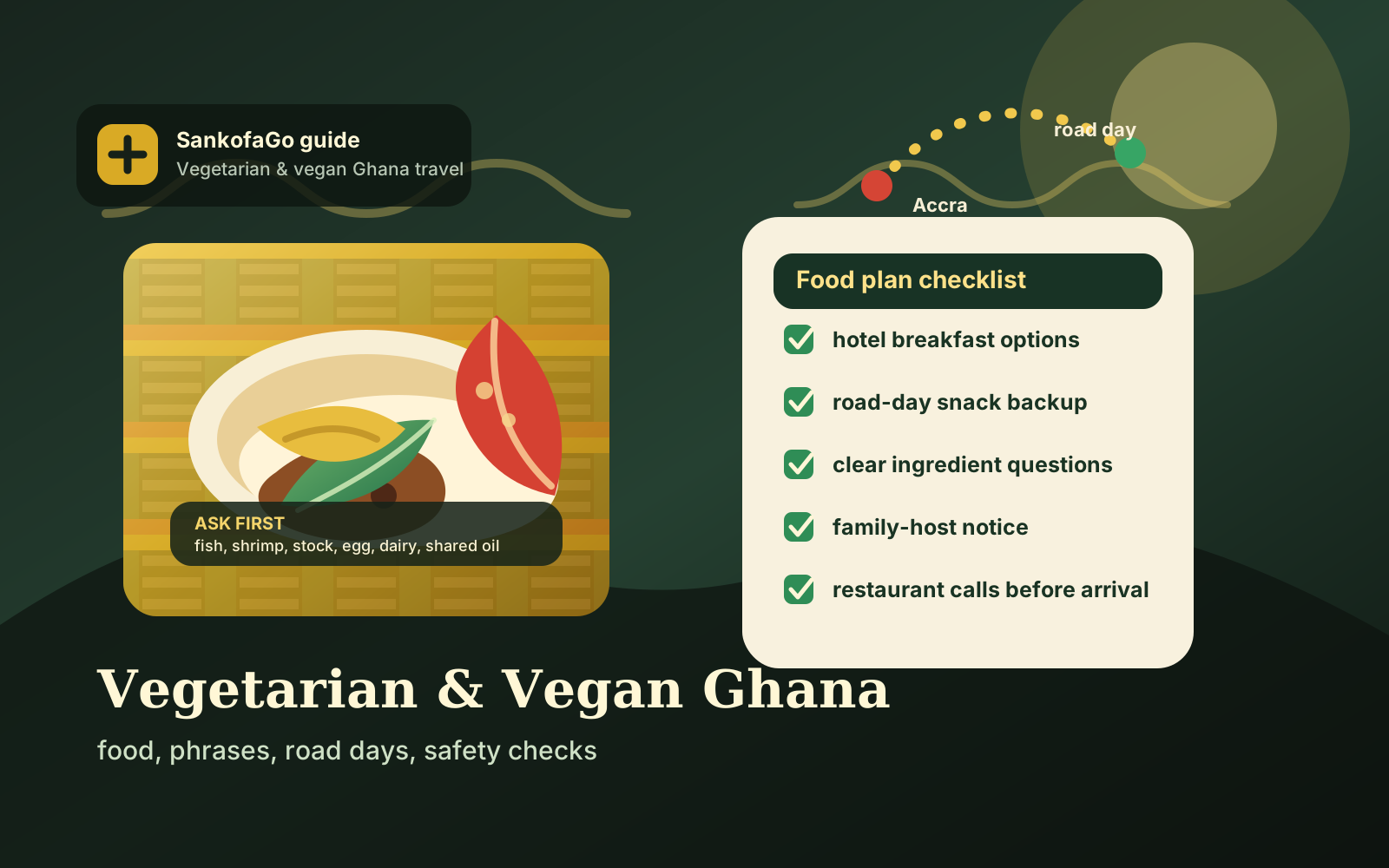
The short answer: plant-based Ghana needs ingredient checks
A vegetarian or vegan Ghana trip is not a repeat of SankofaGo's first-time Ghana food guide or Muslim-friendly Ghana travel guide. Those articles introduce common dishes and halal-conscious planning. This guide answers a narrower question: how should plant-based travelers eat well in Ghana without accidentally assuming that a vegetable-looking stew, sauce, or side is meat-free?
The useful mindset is simple: look for plant-based building blocks, then ask about what went into the stew, soup, pepper sauce, seasoning, and oil. Ghanaian meals are often built from starches and sauces, so a dish can look flexible while still containing fish powder, dried shrimp, smoked fish, meat stock, egg, milk, or butter.
- Best fit: vegetarians, vegans, flexitarians, families with mixed diets, travelers with religious or ethical food restrictions, and groups planning Ghana road trips.
- Plan around: hotel breakfasts, restaurant calls, long transfer days, market fruit, snack backups, ingredient questions, food safety, and whether your group needs strict vegan separation.
- Do not assume: "vegetable stew" means vegan, shito is fish-free, soup has no stock, fried plantain used separate oil, or every stop between regions can handle a strict diet on demand.
- Search intent match: this is a vegetarian and vegan Ghana travel planning guide, not a restaurant directory or a generic list of Ghanaian dishes.
Why Ghana can work for vegetarian and vegan travelers
Ghanaian food has many plant-forward anchors. The Ministry of Tourism, Culture and Creative Arts has promoted indigenous meals such as banku, fufu, waakye, tuo zaafi, and Ga kenkey as part of Ghana's food identity, while Ghana Tourism Authority destination materials highlight familiar visitor foods such as Ghana jollof, kelewele, fufu, waakye, and banku.
Those foods are not automatically vegetarian or vegan in their final served form. The opportunity is that many of the base ingredients - rice, beans, maize, cassava, yam, plantain, millet, sorghum, peanuts, and vegetables - are plant-based. The challenge is that the sauces and sides often carry the animal ingredients.
That is why the best plant-based Ghana plan is specific. It does not just ask "Is there vegetarian food?" It asks which dishes can be made without meat, fish, egg, dairy, fish powder, shrimp, meat stock, or shared sauce, and which days need a backup meal before the road gets long.
Dishes and ingredients to start with
For many travelers, the easiest starting points are rice and beans, plain rice, boiled yam, boiled or fried plantain, roasted plantain, kelewele, fruit, vegetable stews, bean stews, groundnut-based sauces, kontomire-style greens, salads at trusted restaurants, and hotel breakfast items that can be checked one by one.
Waakye can be promising because its base is rice and beans, but the usual add-ons may include egg, meat stew, fish, sausage, spaghetti, shito, and other sides. Red red can also be promising because it is built around beans and fried plantain, but you still need to ask whether fish, meat stock, shrimp powder, or shared oil is involved.
Fufu, banku, kenkey, tuo zaafi, ampesi, yam, rice balls, and other starches often depend on the soup, sauce, or stew they are served with. A plant-based traveler should spend more energy on the accompanying liquid or relish than on the starch itself.
The questions that prevent most mistakes
English is Ghana's official language, so clear English questions are usually more useful for visitors than memorized phrases in a language they cannot pronounce or understand well. Keep the question short, concrete, and ingredient-based.
Instead of asking only, "Is this vegan?" ask, "Does this have meat, chicken, fish, smoked fish, dried shrimp, egg, milk, butter, cheese, or meat stock?" If you avoid fish but eat dairy, say that. If you are vegan, say "no animal products" and then list the common items you mean.
For strict vegan travelers, also ask about shared pans, shared frying oil, and whether a sauce base was cooked earlier with fish or meat. Not every kitchen can separate everything, and that is useful information. A polite no is better than a meal that does not match your needs.
- Useful restaurant script: "I do not eat meat, chicken, fish, egg, milk, butter, cheese, or meat stock. Can you make rice, beans, plantain, or vegetables without those?"
- Useful road-stop script: "Is the beans stew cooked with fish or meat stock?"
- Useful shito question: "Does this shito contain fish or shrimp?"
- Useful hotel question: "Can breakfast include fruit, oats, bread, beans, vegetables, and tea or coffee without milk?"
Where plant-based eating is easiest
Accra, Kumasi, larger hotels, international restaurants, cafes, supermarkets, and traveler-focused kitchens are usually easier places to manage vegetarian or vegan preferences because staff may be more used to dietary questions and advance requests. That does not mean every menu is safe; it means the conversation may be easier.
Local chop bars, roadside food stops, beach villages, nature-site lunches, family kitchens, and festival days can be more variable. They may offer excellent food, but the meal is often built around what was cooked that morning. If the stew already contains fish or meat stock, the staff may not be able to remake it quickly.
This is where planning matters. A SankofaGo route can place stricter meal days in cities, choose hotels with breakfast flexibility, call restaurants before arrival, and avoid leaving a vegan traveler to negotiate dinner for the first time after a five-hour road transfer.
Road days, heritage days, and nature routes need backups
Plant-based travel gets harder when hunger and distance meet. A Cape Coast heritage day, a Kakum or Shai Hills nature stop, an Eastern Region craft route, a Volta hiking day, a Mole or Tamale transfer, or a Western Region beach road can stretch longer than the map suggests.
Pack simple backups: nuts if you can eat them, crackers, protein bars, sealed snacks, fruit from a trusted source, electrolyte packets, and any specialty vegan item you depend on. For group trips, decide which snacks are personal and which are shared so the plant-based traveler is not left with the emergency food everyone else ate first.
Mid-article planning note: start at /plan and ask Nana for a "vegetarian Ghana food plan." Share your diet level, allergies, cities, hotels, road days, whether you need strict vegan separation, and whether your trip includes Cape Coast, Kumasi, Volta, Mole, beach resorts, family homes, festivals, or market food. SankofaGo can help sequence meals around the actual route.
Food safety still comes first
The Ghana Food and Drugs Authority says its Food Division protects public health by ensuring safe and quality food on the Ghanaian market, including food-service licensing, street-food vendor permits, food-safety education, and food-safety emergency response. That official framework matters, but travelers still need day-to-day judgment.
CDC's Ghana traveler guidance tells visitors that food and water standards vary and advises travelers to choose safe food and drinks. CDC also notes that unsafe food and water can help spread illnesses such as cholera and other travel-related infections.
For plant-based travelers, the safety rule is not "avoid local food." It is: choose busy, clean-looking vendors or restaurants; favor food served hot; be cautious with raw salads unless the kitchen and water handling are trustworthy; drink factory-sealed water when appropriate; wash hands; and avoid letting dietary restrictions push you toward unrefrigerated or poorly handled food just because it is meat-free.
Family homes, events, and cultural respect
If you are visiting family, a hometown, a funeral, a wedding, a naming ceremony, a church meal, or a community event, explain dietary needs early and respectfully. Ghanaian hospitality is generous, and hosts may feel embarrassed if they learn at the table that you cannot eat what they prepared.
Bring clarity, not judgment. "I cannot eat fish or meat for personal reasons" lands better than a speech about what others should eat. If the host offers a plant-based starch with a sauce you cannot eat, thank them and ask whether plain rice, fruit, bread, roasted plantain, or another simple option is possible.
For diaspora travelers, this can be emotionally tender. Food may be one way family expresses welcome. A good plan protects both sides: the traveler eats safely and honestly, while the host gets advance notice and does not feel rejected at the table.
How SankofaGo can help
Vegetarian and vegan Ghana planning is mostly logistics: where you sleep, when you drive, what restaurants can be checked in advance, which days need supermarket stops, and how to brief a driver or guide without turning every meal into a negotiation.
SankofaGo can help map restaurants, hotel breakfast questions, market stops, road-day snack plans, family-visit expectations, vegan-friendly city days, and fallback meals for long routes. We can also help mixed groups choose places where plant-based travelers have real options without forcing everyone else into the same menu.
When you are ready, compare support levels at /pricing, then use /plan with "vegetarian" or "vegan Ghana trip" in your notes. Tell Nana your strictness level, allergies, comfort with shared oil, preferred cities, and the route you are considering, and we will help make the food plan feel calm instead of improvised.
Frequently asked questions
Is Ghana good for vegetarian travelers?
Yes, Ghana can work well for vegetarian travelers if meals are planned around ingredients. Rice, beans, plantain, yam, fruit, vegetables, and many starches are useful starting points, but soups, stews, stocks, shito, and sauces need questions.
Is Ghana good for vegan travelers?
Ghana can work for vegan travelers, especially in Accra, Kumasi, larger hotels, and planned routes, but strict vegans should ask about fish, shrimp, meat stock, egg, dairy, and shared oil before assuming a dish is vegan.
What Ghanaian foods can be vegetarian or vegan?
Possible starting points include waakye without animal toppings, red red when cooked without fish or meat stock, plain rice, beans, boiled yam, plantain, kelewele, fruit, vegetable stews, and some starches with a checked plant-based sauce.
Does Ghanaian shito contain fish?
Many versions of shito include fish or shrimp, so plant-based travelers should ask directly before eating it. Do not assume a pepper sauce is vegan because it looks like chili oil.
How do I ask for vegan food in Ghana?
Ask in clear English and list the ingredients you avoid: no meat, chicken, fish, smoked fish, dried shrimp, egg, milk, butter, cheese, or meat stock. If shared oil matters, ask about that too.
Should vegetarian or vegan travelers bring snacks to Ghana?
Yes. Snacks are especially useful for long road days, heritage routes, nature stops, late arrivals, and mixed-group travel where the next meal may not be easy to customize.
Can SankofaGo plan a vegetarian or vegan Ghana trip?
Yes. SankofaGo can build meal checks, hotel breakfast questions, restaurant calls, market stops, road-day backups, and mixed-diet group planning into a Ghana itinerary.
Sources & further reading
- Ghana Food and Drugs Authority - Food Division
- CDC Travelers Health - Ghana traveler view
- CDC Travelers Health - Food and drink considerations when traveling
- Ministry of Tourism, Culture and Creative Arts Ghana - Launch of FEAST GHANA
- Ministry of Tourism, Culture and Creative Arts Ghana - Culture
- National Commission on Culture Ghana - Regional representation and diversity
- Ghana Tourism Authority / Visit Ghana - See Ghana brochure
Ready to see it for yourself?
Plan your Ghana trip free with Nana, our AI planner — then our team books every car, hotel, and guide. You just confirm, pay, and go.
Start planning — it's free